


Firstleaf offers a great selection of wine while taking the guesswork out of shopping, depending on an algorithmic approach that learns your tastes over time and sends you increasingly personalized bottles.
For plenty of subscribers, this works exactly as advertised. For others, relying on an algorithm to determine something as personal as taste in wine tends to yield mixed results. The good news is that online wine subscription and shopping options have diversified considerably over the last decade. So whether the sticking point is cost, control over selection, or a box that keeps arriving before you’ve run out, there’s a service out there to suit your specific needs.
Let’s take a closer look at some of the common speed bumps that subscribers of algorithm-based wine subscriptions like Firstleaf tend to eventually encounter, as well as some alternative options worth considering.
Why People Start Looking for Firstleaf Alternatives
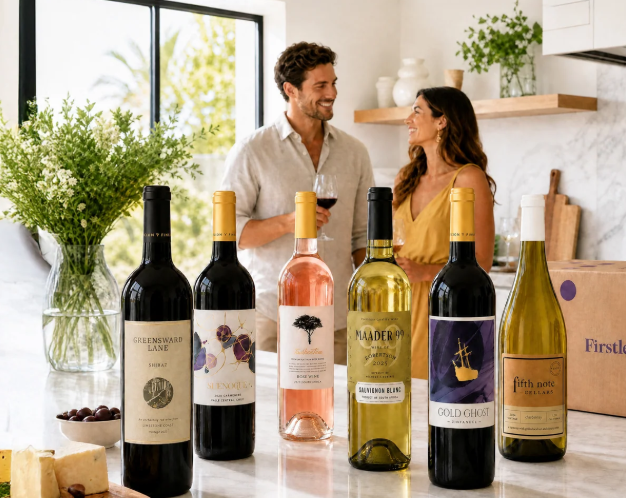
Firstleaf’s model is straightforward. Subscribers take a quiz to personalize an initial selection and then rate the bottles they receive, allowing Firstleaf’s algorithm to get smarter about their palate with each rating and improve future wine shipments according to personal taste.
Your first six bottles run $44.95 at the lowest-priced Classic tier, and subsequent club shipments are $99 each. You can set your shipping frequency anywhere from every two weeks to every twelve, and if you don’t like a bottle, they’ll credit you toward a replacement.
While it’s a reasonable deal, here’s where it tends to break down:
You don’t choose the bottles. This is the core tradeoff of any algorithmic club. While it may be a bonus for certain subscribers, it feels more like a downside for someone who wants reassurance that a bottle of their favorite variety will be included.
The algorithm needs a lot of data before it gets “good.” You’re rating bottles you’ve already paid for, which means the learning curve is expensive. At several boxes in, you could still be getting wines that are near-misses. Maybe they’re technically in the right style, but not quite what you’d have picked.
Discovery has a ceiling. Once the algorithm has you pegged, it tends to stay in that lane. That’s the point of algorithmic personalization, but it can start to feel narrow if what you really want is a bit of variation and to try wines you normally wouldn’t have chosen for yourself.
In the end, Firstleaf is a specific service that’s suited to a specific kind of drinker: someone who wants the decision taken off their plate and has the patience to train the algorithm over the course of a few shipments.
But this algorithmic approach isn’t your only option.
For example, some subscriptions use a curated model, where they rely on teams of sommeliers or winemakers who select the wines, and you choose from pre-built cases or themed collections. This tends to be best for people who want quality vetting without a quiz or algorithm standing between them and their next bottle.
And then there’s the à la carte approach, where you browse and select bottle by bottle — sort of like a wine shop that delivers. This is best for people who know roughly what they like, want to control the exact mix, and don’t want to necessarily opt into a recurring subscription.
Plenty of services blend these models, too, and before choosing an option, it may be helpful to clarify how much of the wine selection decision you want to hand over.
At a Glance
| Model | Commitment | Typical bottle price | Free shipping | |
| Wine Insiders | Curated + à la carte | None required | $10–$35 | All club orders or 6+ bottles |
| Winc | Algorithm + swaps | Monthly or quarterly | $16–$22 | With membership |
| Naked Wines | Credit-based | $40/month deposit | $12–$25 (Angel price) | Always |
| Splash Wines | Bulk cases | None required | Often under $10 | 15+ bottles |
| Dry Farm Wines | Curated membership | Recurring | $32-$35 | Included |
Wine Insiders: Best for Expert Curation Without the Commitment
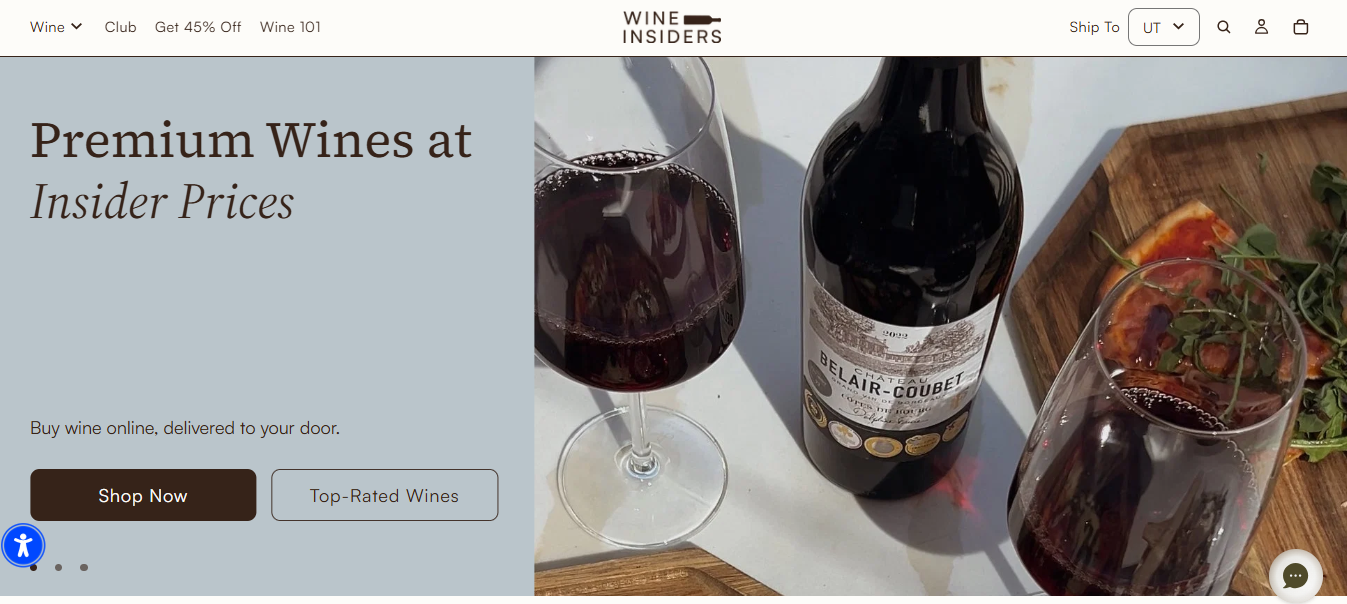
Wine Insiders started in 1982 as one of the first direct-to-consumer wine clubs of its kind, with bottles packed in a garage and delivered by taxi in Chicago. Now with millions of customers across America, Wine Insiders is a digital-first retailer with a curated-meets-à-la-carte model.
An in-house panel of sommeliers, winemakers, and industry buyers tastes through hundreds of wines and stocks only what makes the cut, drawing from around 40 varieties across 15 wine regions. You then shop from their vetted selections.
Pricing runs from around $10 to $35, a bottle with the majority of the catalog sitting in the mid-teens. And because Wine Insiders sources directly from wineries instead of going through distributors, you’re routinely getting award-winning bottles under $20. Shipping is free on six bottles or more, and most orders ship in two to three days.
The current wine club intro offer is 15 bottles for $99, and after that it’s 12 bottles for $149 every 12 weeks. You can choose from all white, all red, or mixed case options, and you have the ability to skip a shipment or cancel your subscription at any time. There’s also Wine Insider’s Perfect Pour Promise to back up the selection. Basically, if you don’t love a bottle, they’ll make it right with a 100% money-back guarantee.
Best for: Anyone who wants professional curation and good value but appreciates having the option to pick wines for themselves or rely on expert selection.
Winc: Best for Algorithmic Personalization Alternative
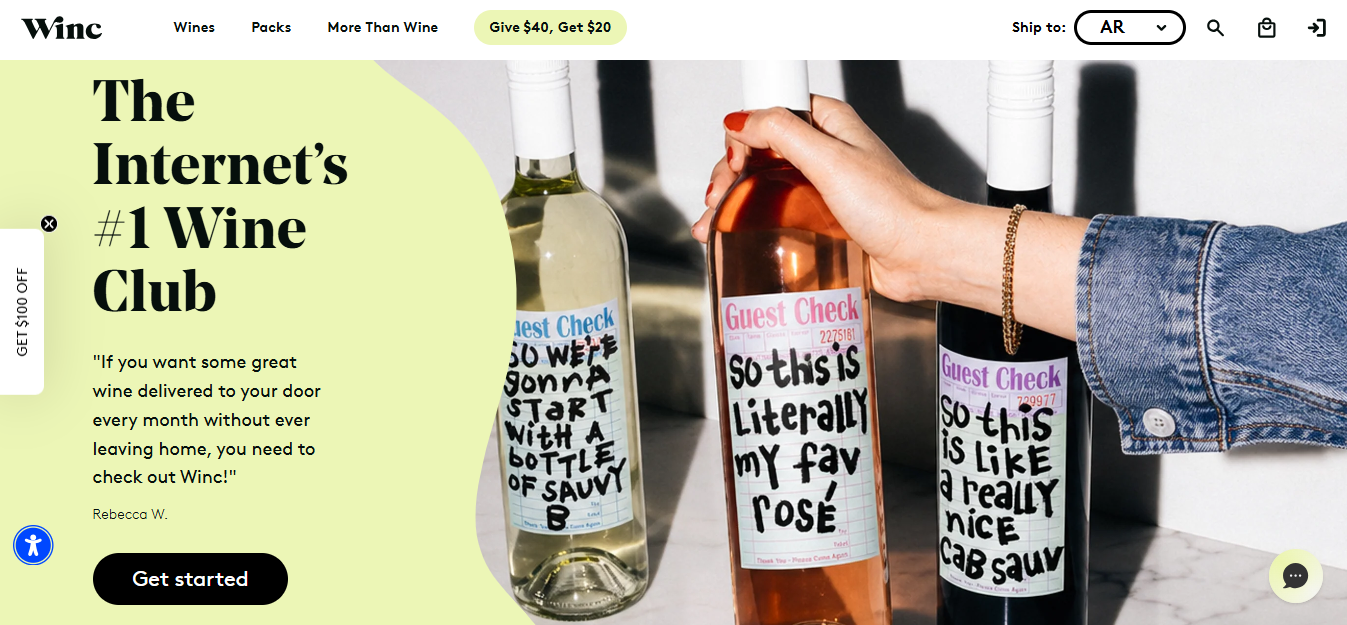
If you like the quiz-and-rate model but are ready to leave Firstleaf for other reasons, Winc is the closest like-for-like swap. You take a six-question Palate Profile quiz, Winc matches wines to your palate, and you can swap any wine recommended by the algorithm for something else before the box ships. That one feature resolves much of the algorithm-related frustration subscribers describe.
There are two membership options: six bottles delivered monthly or twelve bottles delivered every twelve weeks. Members get 20% off everything, free shipping, first access to new releases, and the ability to skip a shipment anytime. Plus, an additional 10% case discount is applied automatically on orders of twelve bottles or more.
What you pay depends on which wines are in your order. Bottles typically run $16-$22 before the member discount, and Winc reports members average roughly $115 per 6-bottle shipment and $220 per 12-bottle shipment. Since Winc bottles much of its wine under its own labels, the catalog skews toward wines you won’t find elsewhere.
If you’re not quite ready for a membership, Winc sells pre-built packs with no subscription required — though you give up the member pricing.
Best for: People who like the quiz-and-rate experience but want veto power over the final selection.
Naked Wines: Best for Supporting Independent Winemakers
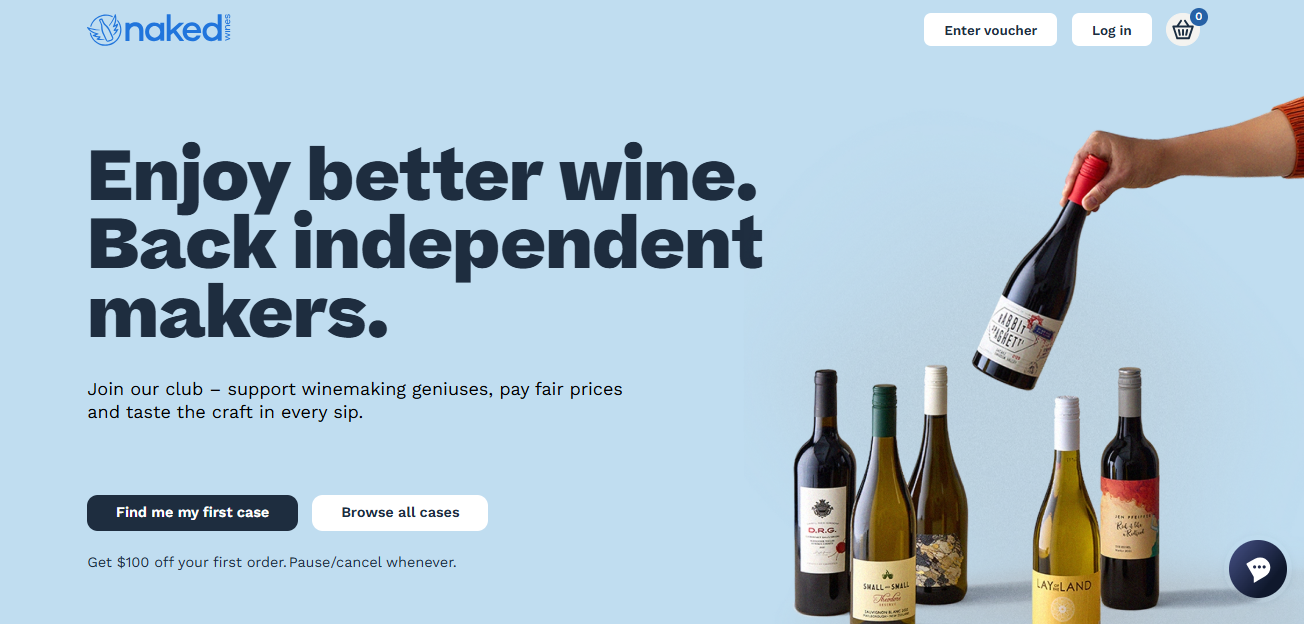
Naked Wines isn’t really a wine club in the conventional sense. Members are more like angel investors, which is exactly what the company calls them. You become an “Angel” by putting $40 per month into your own account. That money is your credit, it doesn’t expire, and it sits there until you decide to spend it.
Naked Wines uses those funds to bankroll independent winemakers around the world. In exchange, Angels buy those wines at 40% to 60% off non-member prices, ranging from $13 for everyday bottles up to $60 at the higher end, with most of their wines priced in the $10–$20 range. The wines are all exclusive to Naked Wines and made by producers you can interact with directly via the membership portal, alongside a review database with millions of member ratings.
Shipping is free, orders start at six bottles, and if your cart exceeds your balance, you simply top up the difference at checkout. Full cases typically earn a bonus bottle, too. Their satisfaction guarantee covers anything you don’t enjoy, and you can cancel anytime.
Best for: Wine drinkers who want a story behind the bottle and don’t mind pre-funding their purchases.
Splash Wines: Best for Stocking Up in Bulk
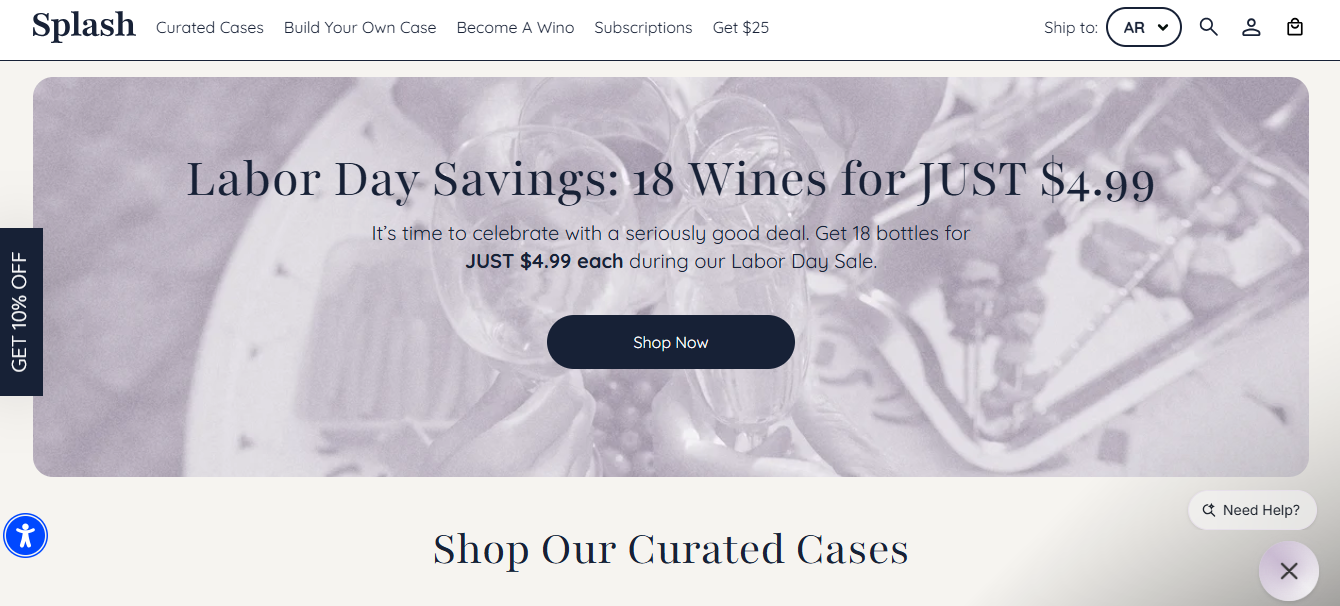
Splash Wines is a three-generation family wine business built around a simple idea: buy bigger, and pay less per bottle. Wines are tasted and vetted before making it to their online shop, and the range spans familiar varieties from major wine-producing countries to more obscure finds.
Instead of six-bottle boxes, Splash sells 15- and 18-bottle cases, either pre-curated by theme or built bottle by bottle. Per-bottle prices drop pretty low, with many cases working out to well under $10 a bottle. There’s no membership requirement and no auto-enrollment — you simply buy a case when you want one.
Shipping is free on 15 or more bottles, and their Gotta-Love-It guarantee covers anything you don’t enjoy. If you’d rather have wine arriving at a regular cadence, there’s an optional subscription that comes in 6- or 15-bottle increments at monthly, bi-monthly, or quarterly intervals.
New subscribers get $20 off their first shipment with code SUBSCRIBE, working out to 15 bottles for $69 shipped free. Skip or cancel anytime, and a separate Wino membership tier adds cash back for an annual fee.
Best for: Households that go through wine steadily and want to stock up for big events or rainy days.
Dry Farm Wines: Best for Low-Sugar and Lower-Alcohol Drinks
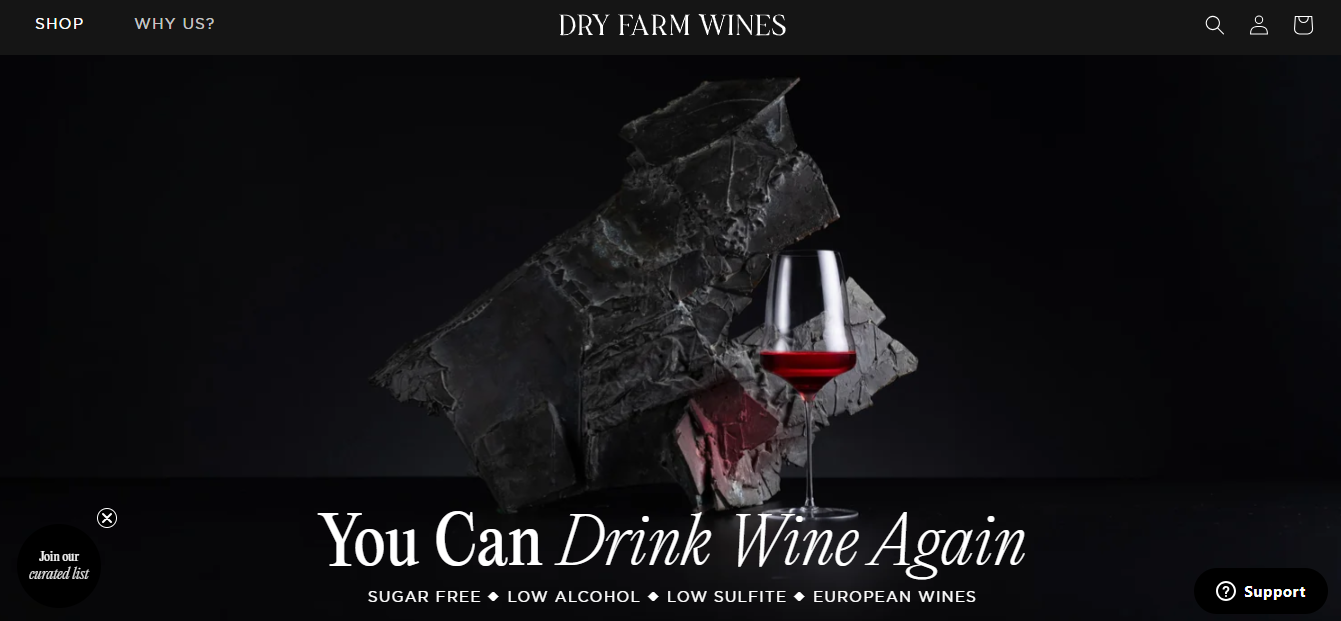
With Dry Farm Wines, every bottle comes from small family farms and is tested against a strict set of standards: sugar-free, lower alcohol, lower sulfites, dry-farmed without irrigation, free of pesticides or herbicides, and vegan. Wines cap at 12.5% ABV, are fermented with native yeasts rather than lab-made ones, and are verified by an independent enologist. The company estimates fewer than 0.1% of the world’s wines meet the full criteria, and Dry Farm Wines was among the first to publish nutrition and ingredient information on its bottles.
You can choose all red, all white, rosé, sparkling, or mixed selections in 6- or 12-bottle shipments, at monthly, bi-monthly, or quarterly shipping intervals. Membership pricing is $206 for a 6-bottle shipment and $384 for a 12-bottle shipment. One-off shipments at non-member rates run $256 and $481, respectively.
Ground shipping is complimentary, memberships can be paused or cancelled at any time, and their 100% Happiness Promise means any bottle you don’t love gets replaced or refunded.
Best for: Health-conscious enthusiasts who want natural, low-intervention European wine and will pay a bit more for verified standards.
How to Choose the Right Wine Club for You

The most useful way to narrow this down is to work backward from whatever specifically wasn’t working with Firstleaf.
The inability to choose your own bottles is a common complaint, and an à la carte model easily solves for this. Wine Insiders and Splash Wines both let you build an order from a vetted online wine shop with no quiz in between. Subscriptions exist at both, but they’re entirely optional.
Maybe the algorithm was the problem, but the convenience was welcome. Winc keeps the quiz-and-rate structure while letting you override any recommendation for a preferred bottle before your club box ships.
When you want your wine budget doing something beyond filling a rack, there’s Naked Wines. It routes money to independent producers, and the credit model means you never pay for a wine you didn’t pick.
And for those making healthier lifestyle choices yet not wanting to give up wine, Dry Farm Wines offers a service built around verified purity standards.
When choosing a wine club, consider your drinking habits before your palate. Someone finishing a couple of bottles a month is poorly served by a 15-bottle case, and someone entertaining most weekends will find a quarterly six-bottle shipment frustrating. Match volume and cadence first, then compare the wines themselves.

- The Best Firstleaf Alternatives in 2026: 5 Wine Subscriptions Worth Switching To - September 5, 2026
- Best Bright Cellars (Now Winc) Wine Subscription Alternatives - March 6, 2026
- Naked Wines vs. Wine Insiders: Picking Your Next Wine Subscription Box - February 5, 2026