

Delivery services are ubiquitous today, with new apps and delivery options popping up all the time. You could live your whole life from your couch if you wanted to (and on those rainy days when I’m binging new European seasons of Love is Blind, I’m honestly tempted).
Long gone are the days when the milkman would only drop off a pint or two of 2%. Most milk delivery services these days also offer full grocery delivery as well, putting them in the same conversation as many of the big-name delivery apps.


So are these delivery services actually worth it – or are you better off hauling your reusable shopping bags to your local supermarket?
If the idea of testing out multiple options has you feeling frazzled, don’t worry. In this article, I’ll break down the pros and cons of choosing delivery over shopping in-store, four important things to consider when choosing a service, and seven delivery options that’ll help you turn supermarket time into me time.
Where Shopping In-Store Wins
Pricing
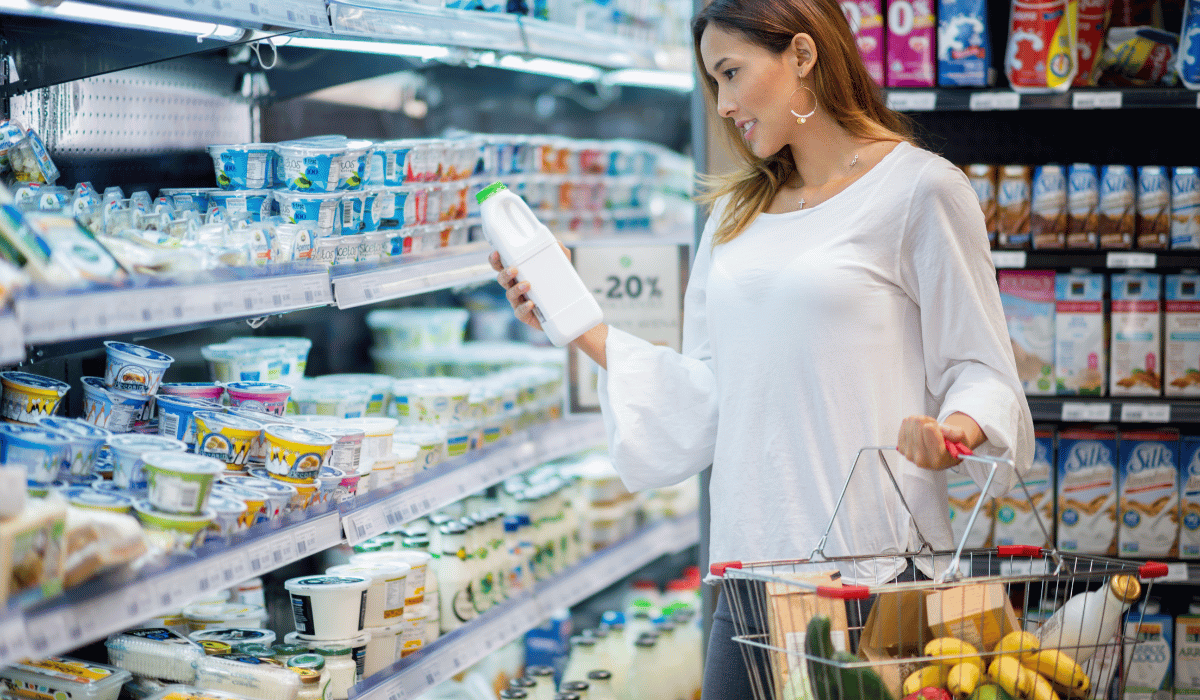
Let’s get this out of the way immediately – in-store per-unit pricing will almost always beat delivery pricing, especially for the national app-based services that apply a sizable markup to each product in addition to their delivery, service, and/or membership fees. A gallon of milk will always be at least a little cheaper when you trek out to the shop to pick it up yourself.
Discovery
While most people do tend to stick to a core list of familiar products when shopping, there’s something to be said for spending 40 minutes just browsing the shelves and bins, discovering new items. If you love scouring the endcaps for deals and lining up for free samples, you may prefer shopping in-store.
Substitutions
Taking care of your own shopping makes choosing alternate items super easy. If the supermarket is out of the specific item you want, you can simply take a look at what’s on the shelf and pick your second favorite option. No chatting back and forth with an anonymous shopper to see what’s available.
Selecting Your Own Produce
You might want your tomatoes fully ripe and ready to eat tonight. Or you might have a plan to eat them three days from now. When you’re browsing the produce aisle yourself, you can choose fruits and vegetables at the exact level of ripeness to fit your weekly menu.
Flexibility
On-demand grocery delivery services can take a couple of hours, and scheduled services might only come once or twice a week. If you tend to make most of your meal decisions on the fly and don’t want to wait around for ingredients to show up, shopping in-store is probably more your style.
Where Delivery Takes the Cake

Saving Time
Just as price is the biggest selling point for shopping in-store, saving time is by far the biggest reason to switch to delivery. Setting up a grocery list on a website or in an app takes up a tiny fraction of the time you’d spend driving out to the store, filling your cart, waiting in line to pay, and then driving home again. For busy students, parents, professionals, or caregivers, this can make a huge difference.
Convenience
What would you rather do? Hang out on the couch with The Real Housewives of Salt Lake City, waiting for a delivery notification? Or sit in traffic, navigate a hectic parking lot, and then push a shopping cart with a broken wheel around your local grocery store? I don’t know about you, but I’d rather find out what Lisa Barlow is up to this week (spoiler: no good).
Avoiding Impulse Buys
I’m a sucker for an impulse buy – especially if I’ve made the grave error of heading to the supermarket before eating. Cinnamon rolls? Get in my cart. Expensive designer hummus? Yes, please. Yogurt that tastes like lemon meringue? Gimme. They may not have been on my list, but you’d better believe I’m taking them home (and paying an extra $16 I hadn’t planned to spend). Oops.
Conserving Fuel
You may be lucky and live just two blocks away from your local supermarket. But chances are, you’ll drive further when you need to go shopping. A USDA study showed that most Americans drive 3-4 miles each way to shop at their preferred grocery store. If you’re shopping once a week, that’s 6-8 miles. If you forget something and need to go back… well, you can do the math.
What to Consider When Choosing a Milk and Grocery Delivery Service

Selection: Your service should offer easy access to the everyday staples and common household products you regularly use. If you have to run out to get half your list anyway, then you’re not really saving time, are you?
Fees: Read the fine print! Most services waive the delivery fee if your cart subtotal hits a certain threshold. If the service charges a membership fee, do the math to see whether you’ll get your money’s worth before signing up. It’s also worth looking into whether delivery drivers are fairly compensated or rely on tips, since this can jack up the price of each delivery.
Service area: Double-check that the service operates in your area. The national apps may not be available in all rural regions, and the local services usually operate in specific counties only.
Scheduling: Is the service on-demand or based on scheduled delivery routes? The service you choose should fit your lifestyle.
I took a look at a few of the big national grocery delivery services and several regional alternatives to see how they stacked up.
At a Glance
| NAME | REGION | FEES | MEMBERSHIP | DELIVERY SCHEDULE | SELECTION |
| Instacart | Nationwide: Major metro areas, suburbs, and select small towns | Delivery fee varies 5% service fee | $9.99/mo | Priority (up to an hr)Standard (up to 5 hr)Scheduled (2 hr window) | Fresh food, pantry goods, household items, and alcohol |
| UberEats | Nationwide: Major metro areas, suburbs, and select smaller towns | Delivery fee varies Service fee up to 15% | $10/mo | On-demand (up to 2 hr)Scheduled (30 min window) | Groceries, household goods, pantry items, and alcohol |
| Walmart Mobile App | Nationwide | $7.95 – $19.95 delivery fee $6.99 small order fee | $98/year | On-demand (up to 3 hr)Scheduled (1-2 hr window) | Produce, general grocery items, household and retail goods |
| Mercato | Nationwide: Major metropolitan areas | Delivery fees vary Service fee based on order subtotal | $8 – $23/mo | On-demand (1 hr)Scheduled (depends on shop’s operating hours and availability) | Fresh produce, meat, seafood, baked goods, dairy, and pantry items |
| Smith Brothers | Greater Seattle and Portland areas | $0 – $4.99 delivery fee No service fee | No membership | Reliable weekly delivery | Locally sourced staples and produce, fresh dairy, and seasonal items |
| Farm to People | NYC metro, Lower Westchester County, Southern Connecticut | Delivery fees depend on your area and cart amount | Subscription fees are based on box contents | Delivery a la carte or subscription – you choose day(s) and frequency | Seasonal farm boxes, meat, seafood, baked goods, dairy, ethical pantry staples |
| TC Farm | Minnesota: Greater Twin Cities metro,Rochester, andSt. Cloud | $9.99 delivery fee 3% processing fee | $9.99/mo | One-offs or weekly delivery available; you choose day(s) and frequency | Pasture-raised meat, organic produce, chef-made meals, grocery staples |
Nationwide Delivery Apps
Instacart: Best for Multi-Market Shopping
Major metro areas, suburbs, and select small towns
Instacart has been around since 2012, but I feel like it really became a household name during the pandemic. Through the app, you choose nearby grocery stores and retailers you want to shop from, then create a shopping list for your personal shopper to follow. You can also set your preferences for what they should do if something you want is out of stock – should they pick up a different brand, or do you just want a refund if your first choice isn’t available?
You can schedule your deliveries ASAP or for a future time-block, and they’ll be shopped and delivered to your door by third-party contractors.
The Deets:
- Delivery fee varies depending on retailer, delivery window, and order total
- 5% service fee
- You can chat with your shopper throughout their trip via the app
- $9.99/month membership removes delivery fees on $10+ orders and reduces service fees
- Priority delivery available for an added fee
Pros:
- Wide selection of grocery and household items available, as well as alcohol
- Same-day delivery available within hours
- 1500+ retail partners, so you have a ton of product options
Cons:
- Service fees and per-product upcharges
- Delivery is sometimes unreliable (wrong house or not carrying to your door)
- Have to rely on your shopper to make the right substitutions, which occasionally leads to disappointment
- Tips are expected, since drivers don’t make a lot of money
Uber Eats: Best for Fast Urban Delivery
Major metro areas, suburbs, and select smaller towns
Uber Eats is probably better known for restaurant delivery (that’s definitely what got me hooked), but you can also order your groceries through the app. The set-up is the same as Instacart – you create a virtual cart in the app, your shopper heads to your selected store, etc. Like Instacart, you can also chat with your shopper about substitution preferences.
Uber Eats seems to be a bit quicker at delivery in urban areas and offers a tighter scheduling window for future orders, but its fees are also a bit higher. You can use pre-checkout bundling to order from an additional store without paying extra delivery fees, which is a nice bonus.
The Deets:
- Delivery fee varies based on driver availability, distance, and store location
- Service fee up to 15%
- You can chat with your shopper about your order via the app
- $10/month membership removes delivery fees on $35+ orders
- Priority delivery available for an added fee
Pros:
- Wide selection of grocery, household items, and alcoholic beverages
- Same-day delivery within hours
- Can schedule future deliveries within a 30-minute window
Cons:
- High service fees and per-product mark-ups
- Delivery can be unreliable at times (wrong address, not carrying to door)
- Tips are expected to supplement the low driver wages
- Sometimes iffy substitutions or poor communication
Walmart Mobile App: Best for One-Stop Shopping
Nationwide
I’ll be honest, this is basically just shopping at Walmart without the crowds and janky shopping carts. It’s the same selection of products; you’re just buying them from your couch or desk. After you plug your list into the website or Walmart Mobile app, a Walmart employee will shop your order and prepare it for pick-up or delivery by a third-party driver.
Walmart is more flexible than other services when it comes to payment – they accept credit/debit cards, PayPal, gift cards, and EBT.
The Deets:
- Delivery fees range from $7.95 – $19.95, depending on your cart total and whether you choose standard or express delivery
- $6.99 fee for carts under $35
- $98/year membership waives standard delivery fees
- 3-hour window for on-demand delivery, 1-2 hours for scheduled
Pros:
- Can order anything Walmart sells, including produce, general grocery items, household and retail goods, as well as pharmacy items and subscriptions
- Same-day delivery within hours
- No mark-ups – delivery pricing matches in-store pricing
- No minimum order, although you do pay the aforementioned small order fee (pharmacy subscriptions excluded)
- Flexible payment options
Cons:
- No chat function available, so you can’t advise your shopper about substitutions
- Driver tips are expected
- Some customers report that delivery quality can be a little inconsistent
Mercato: Best for Shopping Local Markets
Major metropolitan areas
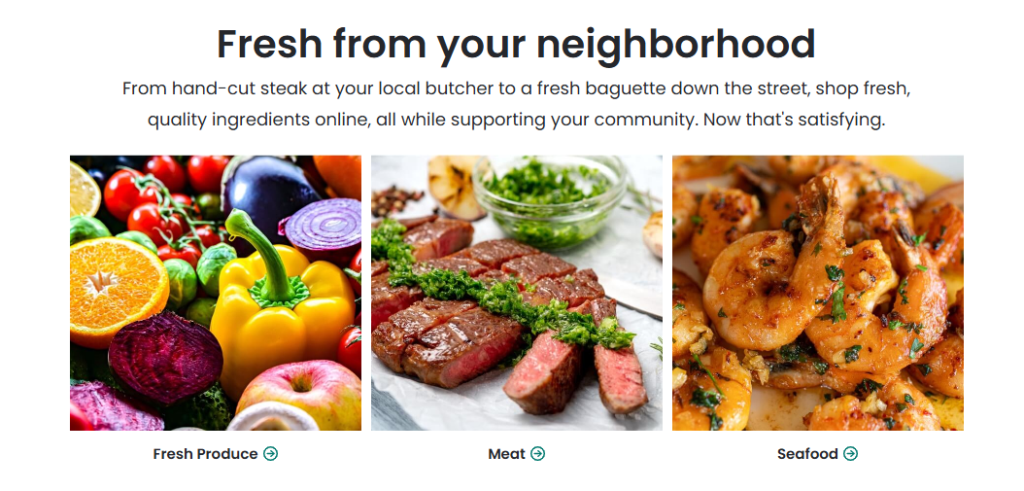
Mercato is similar to the bigger apps in that you choose the stores you want to shop from, but they really focus on local independent retailers. This means you can order from specialty grocers, co-ops, bakeries, fish markets, and even honey shops in your community.
Unlike Instacart or Uber Eats, your groceries are picked out and packed up by grocery store employees and then handed over to third-party contractors for delivery. In theory, this means your dairy products are chosen by someone in the dairy department, your meat is picked by the butcher, and so on.
The Deets:
- Delivery fees depend on the store you select, distance traveled, and your cart subtotal
- Service fee based on order subtotal
- Service fees are reduced with a subscription to a Neighborhood Plan ($8/month) or a City Plan (up to $23/month)
Pros:
- Great selection of dairy, produce, meat, seafood, bakery items, and pantry goods
- Ability to shop at multiple independent local retailers at once
Cons:
- The subscription plans are a little confusing and complicated
- A lot of people report having technical issues with the app and frustrating experiences with customer service
- Driver tips are expected
Local Delivery Services
I’ve found that local delivery services often have perks that the bigger national apps just don’t offer, like farm-to-table produce, local treats, and curated baskets. Since they’re restricted to specific areas, I couldn’t try them all myself, so I asked a few of my fellow testers to recommend their fave local services.
Smith Brothers Farms: Best in the Pacific Northwest
Puget Sound and Greater Portland
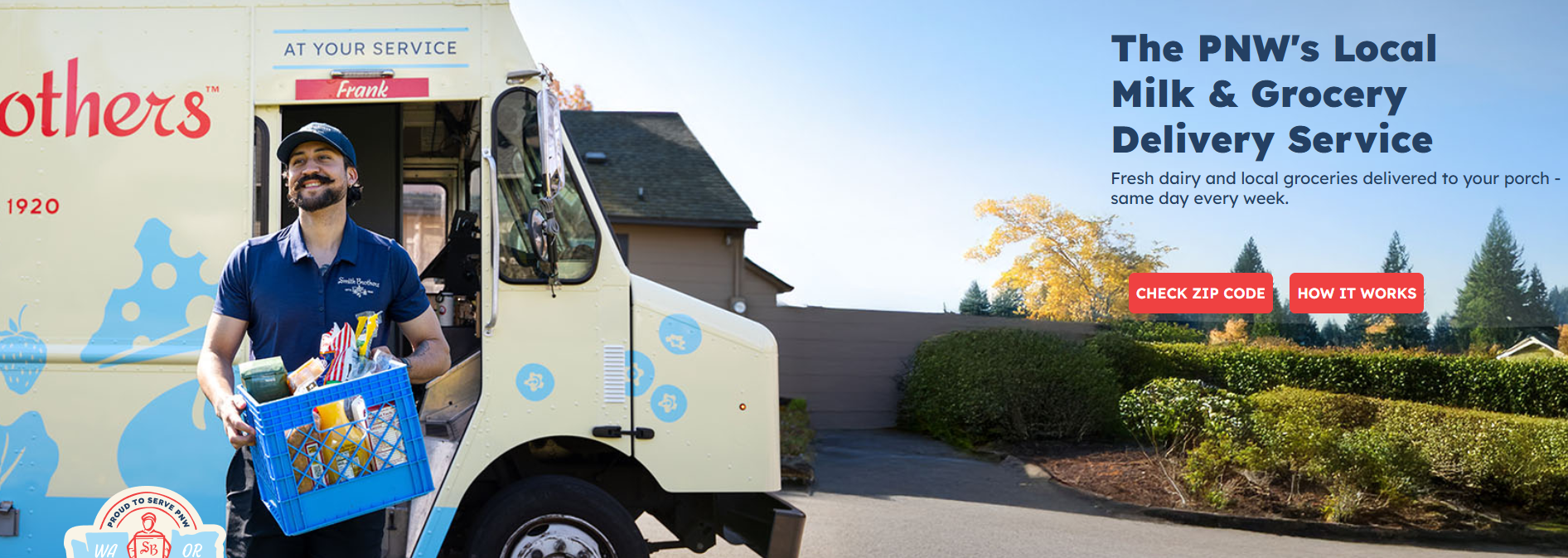
Smith Brothers is a family-run milk and grocery delivery service that’s been around since the 1920s, delivering fresh, small-batch milk and a range of kitchen essentials, like eggs, bread, produce, meat, cheese, coffee, and snacks. 80% of their products are sourced from neighborhood vendors (including yummy goodies from local faves Stumptown Coffee and Franz Bakery). They run scheduled local delivery routes, rather than on-demand service. Think of it as an old-school milkman service for the modern household.
The Deets:
- Set-and-forget subscriptions for your dairy, groceries, and local faves
- Add/remove items from your order up until 2 pm the day before delivery
- Skip weeks when you don’t need the service
- Free delivery for orders over $20 and just $4.99 for smaller orders
Pros:
- No membership or service fees, and no tips
- Your card isn’t charged until you receive your order
- Reliable schedule with a familiar driver every week
- Wide range of staples, prepared foods, and curated harvest boxes
- Super fresh, minimally processed dairy delivered in as little as 48 hours after being made
Cons:
- If you miss your order adjustment cut-off time, you’re out of luck, so you need to stay on top of your grocery planning
Farm to People: Best in NYC Metro
NYC metro, Lower Westchester County, Southern Connecticut
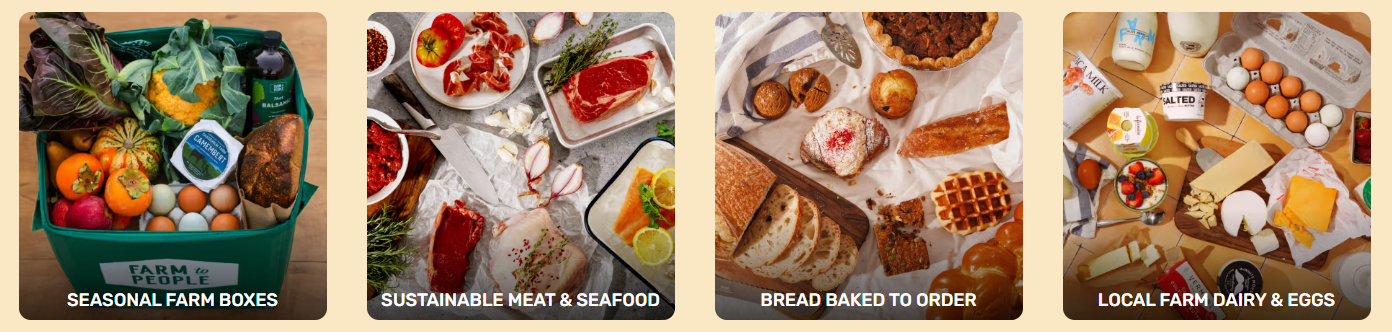
Farm to People works with a network of 150+ local farms to offer fresh, often organic milks, creams, and other dairy products, along with produce, baked goods, seafood, meat, prepared meals, and pantry items. They’re all about sustainability, fair food practices, and spotlighting local producers.
The Deets:
- Harvested and delivered from local farms
- Set-and-forget subscriptions for your staples and favorites
- Choose your delivery date based on their delivery schedule
- Delivery fees are $4.99 in Brooklyn, Manhattan, the Bronx, Hoboken, and Jersey City (free for orders $49.90+); $2.99 – $4.99 in Queens (free for orders $75+); $7.99 – $11.99 in Essex & Bergen Counties, Staten Island, Westchester, and Connecticut (free if $150+)
- Tips are encouraged
Pros:
- Seasonal produce boxes and recipe-driven Cook’s Boxes are customizable
- Each week, you get two free recipes accessed via a QR code on your packing slip
- Recipes for the upcoming week’s Farm Boxes can be found online
Cons:
- Minimum order of $20, which isn’t a huge deal (I could hit that minimum in ice cream alone, to be honest)
- Selection is largely artisanal and generally quite pricey
TC Farm: Best in Minnesota
Rochester-Twin Cities-St.Cloud corridor
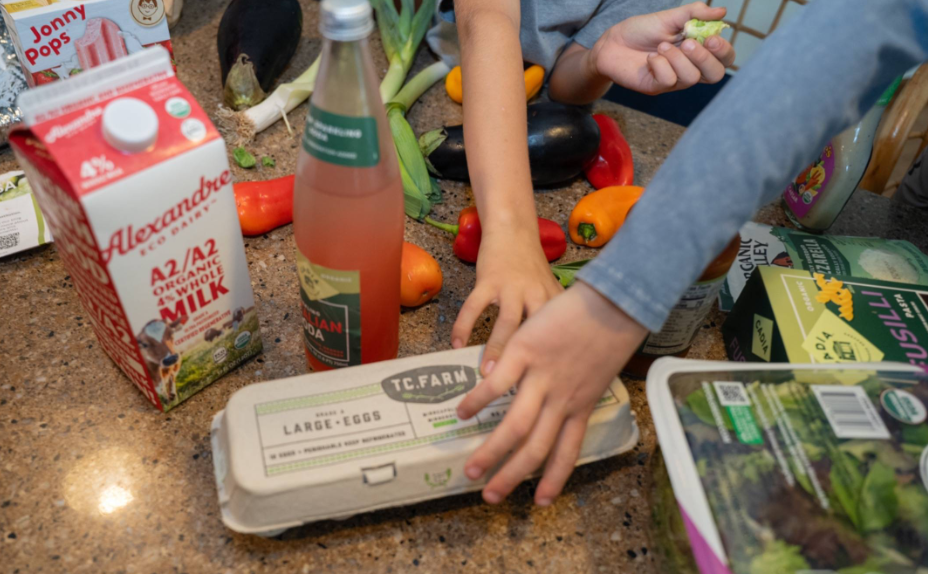
TC Farm is a collective of smaller, family-run Minnesota farms that work together to provide their customers with grass-fed and organic milks, yogurts, and cheeses, pasture-raised meat, organic produce, chef-prepared meals, and pantry staples. You can even get fresh goat milk!
The farms share one delivery route, and for the most part, your order will move directly from the participating farms to your home.
The Deets:
- $10 delivery fee for free accounts, $4.99 delivery fee with membership ($9.99/month or $99.99/year)
- Member-only discounts include 3% off every order
- Pick-up available from Blaine, MN warehouse
- Skip weeks whenever you need to
Pros:
- No minimum order
- GMO- and hormone-free meat
- Text upon delivery, so you can grab it from the porch
- Multiple delivery days available each week for most areas
- Tips not expected
Cons:
- Like Smith Brothers Farms, you need to lock in your order before the cut-off (sorry, no last-minute changes!)
Choosing the Best Milk and Grocery Delivery For Your Lifestyle

While the national apps offer a lot of convenience (love the ability to have ice cream delivered on-demand), this convenience does come with a lot of extra fees and sometimes iffy service. Local milk and grocery delivery services don’t offer the same near-instant gratification, but they do let you access fresh, locally made goods with generally more reliable delivery and lower fees.
The best service for you depends on what you prioritize and how you tend to shop. If you’re the type of person who has a set list of items and tends to shop around the same time each week, a local delivery service is probably a great fit. If your shopping tends to be more sporadic or you usually make dinner decisions impulsively the day of, the flexibility of on-demand delivery might be worth the extra money to you.
Final thoughts: if you have a farm-to-table service in your area, I think it’s definitely worth testing out and comparing against your usual Instacart-type app, if only for the farm-fresh products and local goodies!

- Is Milk (and Grocery) Delivery Worth It? - September 9, 2026
- The Best Naked Wines Alternatives: My Top Wine Club Subscriptions - January 19, 2026
- Best Seasonal Flower Subscriptions - December 10, 2025