
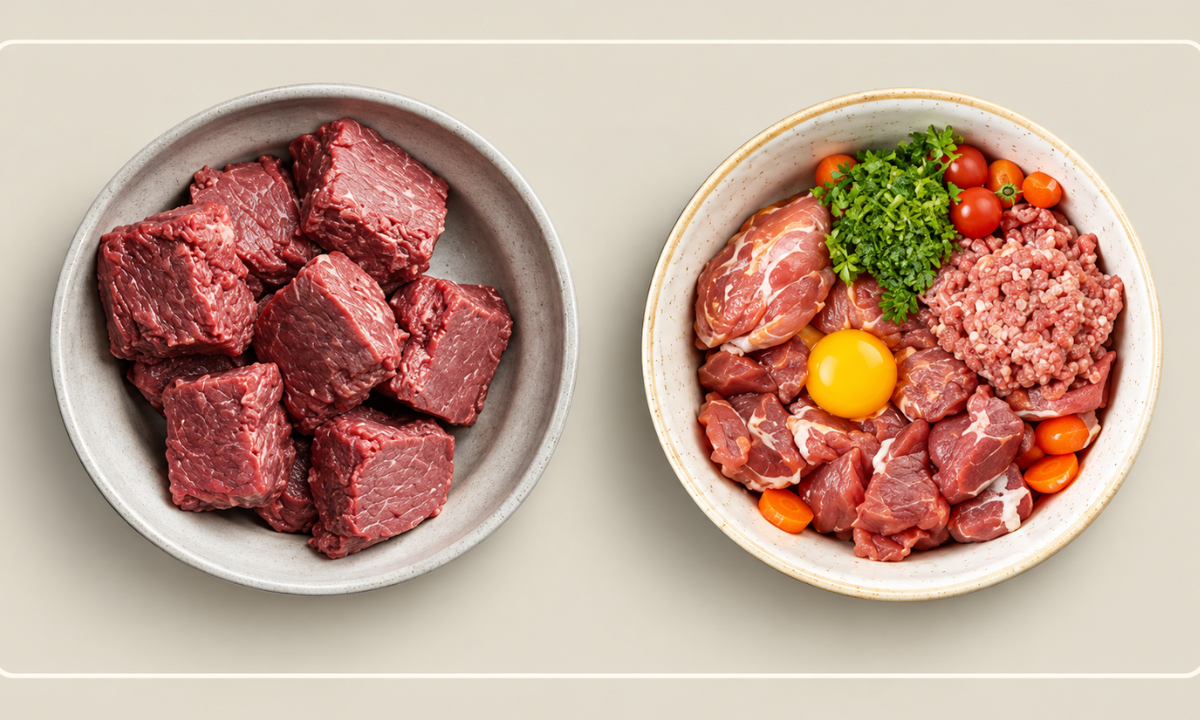
I’ve been a veterinarian for 35 years, and the question of dog food costs has been around just as long. Whether it’s kibble, raw, canned, or dry, dog parents are always concerned about the price of their dog’s diet”and rightfully so. What’s actually in the can, bag, or package has long been a bit shrouded in mystery. So the question, “Is the expensive food actually better for my dog, or am I just paying for marketing?” is reasonable.
My answer on raw dog food isn’t a simple yes or no. I believe it depends on what you’re comparing it to and what you’d otherwise be doing. I’ll cover what you’re paying, what you’re paying for, and where you can trim costs without sacrificing quality.
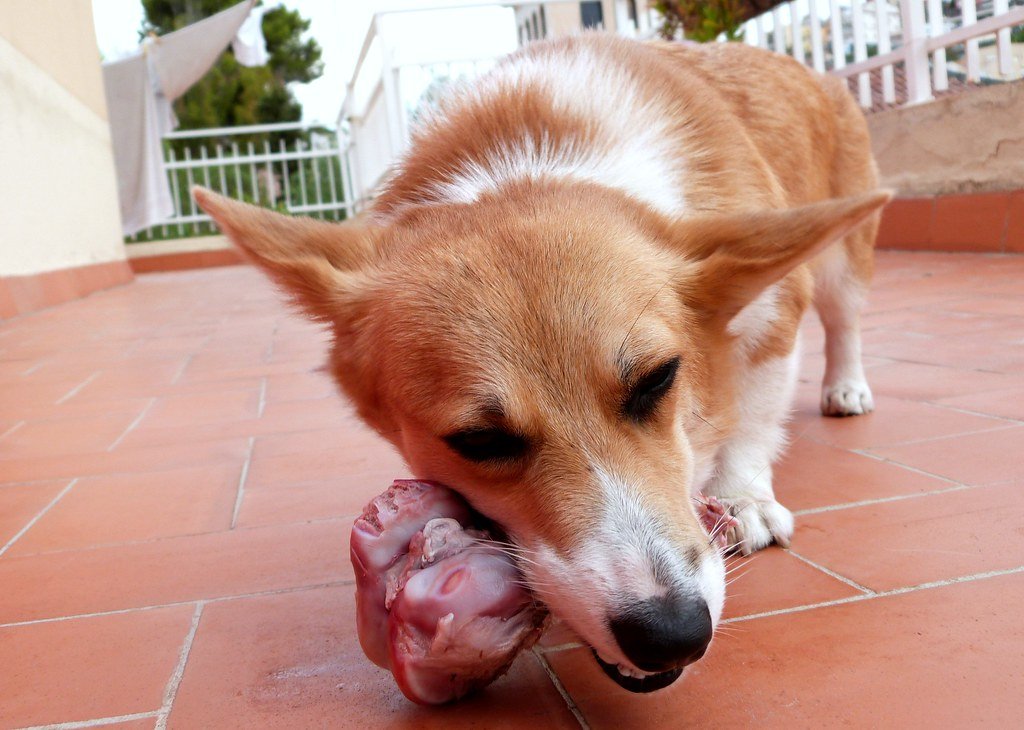
What You Actually Pay for with a Raw Dog Food Subscription
Raw dog food isn’t one-size-fits-all. Your dog’s size, age, and activity level can make a substantial difference. That’s why you typically take a quiz when you go online before a company will show you a price. The following table is based on published pricing and reviews as of October 2026, but always be sure to run your own dog’s information through the company’s calculator. A lazy senior Chihuahua will have a very different dietary cost than a field-trial Labrador.
Typical Price per Day by Dog Size
| Dog Size | Approximate Weight | Typical Cost per Day | Typical Cost per Month |
| Small | Under 25 lbs. | $2.25–$4 | $70–$120 |
| Medium | 25–50 lbs. | $4–$7 | $120–$210 |
| Large | 50–90 lbs. | $7–$10 | $210–$300 |
| Giant | 90+ lbs. | $10+ | $300+ |
On the other hand, feeding a 50-pound dog a mid-range kibble may run you $1″$2 per day. Clearly, feeding your dog a raw diet will cost you several times more than kibble. The important question is what that price difference buys you.
There are two important questions to consider before I get into why a raw diet for your dog costs so much more:
- Will your dog actually eat it?
- Will the members of your household who are in charge of feeding actually keep up with the thawing routine?
A bit of good news is that most raw subscription companies offer a discounted trial box. It’s between $60 and $70 and covers one to two weeks of meals. That can answer questions that a cost table can’t.
What’s Baked into the Price
A frozen raw subscription includes much more than meets the eye; it’s not just meat in a box. Before it arrives at your home, it has gone through:
- Pathogen control. Reputable commercial raw companies use high-pressure processing (HPP), a cold-pressure step recognized by the FDA and USDA as an industry-standard way to eliminate harmful bacteria such as Salmonella and Listeria in raw meat. It also meets Hazard Analysis Critical Control Point (commonly known as HACCP) food-safety protocols and is produced in certified facilities.
- Complete, balanced formulation. Veterinarians used to discourage feeding raw food to dogs because most of it came from home cooking, and the dangers of harmful bacteria were too great. It was also difficult to ensure the food was nutritionally complete and balanced. With so many commercial raw food companies now, animal nutritionists often create the recipes to meet AAFCO standards.
- Cold-chain shipping. Frozen patties travel with dry ice and insulated packaging. Some companies such as We Feed Raw build free cold shipping into the subscription price rather than adding it at checkout.
- Pre-portioning. Based on the quiz you take up front, meals are sized to your dog, which cuts food waste.
Raw Subscription vs. the Alternatives: Cost Comparison
Here’s how the main feeding options stack up for a typical 50-pound dog, using current retail and published subscription pricing.

Monthly Cost for a 50-Pound Dog
| Feeding Option | Examples | Approx. Monthly Cost | What’s Included |
| Mid-range kibble | Grocery and pet-store brands | $30–$60 | Shelf-stable convenience |
| Premium kibble | Orijen ($77–$93 for 25 lbs.) | $75–$100 | Shelf-stable convenience with higher meat content |
| DIY raw | Butcher/grocery sourcing at $2.50–$4.50/lb. | $75–$170 plus supplements | Ingredients only—you do the rest |
| Retail frozen raw | Stella & Chewy’s; Primal (roughly $6–$9/lb. in stores) | $180–$330 | Balanced raw, bought by the bag |
| Fresh-cooked subscription | The Farmer’s Dog | $150–$240 | Gently cooked, portioned, delivered |
| Frozen raw subscription | We Feed Raw and similar | $120–$240 | Balanced raw, portioned, cold-shipped |
There are two things that become obvious from examining the table: The cost of a raw subscription and a cooked-fresh-food subscription are very similar, so if you’re considering one, the other isn’t that different. Secondly, a direct-ship raw subscription can cost less than frozen by bag at the retail store because you’re buying in plan-sized quantities and you’re not paying a store’s freezer-case markup.
The Hidden Costs of DIY Raw
Before looking at the table, you may have thought that DIY raw would absolutely be the winner of cost cutting. Sometimes it is, but the sticker price leaves out:
- Supplements and balancing. Meat alone is not a balanced diet. Vitamin and mineral premixes, organ sourcing, and ground bone add real cost, and not including the proper ratios can lead to serious health costs. The University of Helsinki’s DogRisk researchers have studied raw feeding extensively, and they have concluded that diet composition matters, not just the “raw” label.
- Your time. Sourcing, grinding, portioning, and cleaning up can be quite a job and cost you precious time.
- Freezer space. Bulk buying requires a freezer to hold it, resulting in a $200″$400 purchase, plus the electricity to run it.
- Food-safety handling. Home prep means raw meat across your counters, equipment, and storage, without the pathogen-control step commercial products go through. Commercial facilities use HPP and certified-facility production to keep you and your dog safe.
If the above considerations don’t appeal to you, a commercial raw subscription is essentially paying someone to absorb those hidden costs for you.
Where the Money May Come Back to You
Protein Quality Is the Real Purchase
When you switch your dog to a raw food diet, you’re getting a diet that is built on high-quality animal protein from muscle meat, organs, and bone, rather than carbohydrate-heavy fillers like in many kibble options. You also get minimal processing of those proteins, so heat isn’t destroying the nutrients.
While there’s little scientific data to support the claim that raw feeding is superior for dogs, thousands of dog parents report shinier coats, smaller stools, better weight control, and more interest in their food, and surveys from raw food companies support those claims.
On the research side, the University of Helsinki’s DogRisk group has published some of the most extensive work on raw-fed dogs, including associations between early raw feeding and lower rates of certain owner-reported health problems later in life. Granted, these are associations, not proof, and no diet guarantees anything. But the evidence points in a direction that makes “worth it” a fair question.
Third-party validation also increases my confidence in raw food diets for dogs. One such entity is called the Clean Label Project’s Clean 16, which recognizes brands that test clean for contaminants. We Feed Raw is on their list, as is JUSTFOODFORDOGS Beef & Chicken Recipe, which is a fresh/frozen diet.
Pros and Cons at a Glance
Where raw subscriptions earn their price:
- High-protein, minimally processed recipes formulated to be complete and balanced
- Commercial safety steps (HPP, certified facilities) you can’t replicate at home
- Portioning and delivery that remove the two biggest raw-feeding headaches: math and logistics
- Flexible plans”skip, pause, or cancel anytime
Where they don’t:
- A raw subscription is several times the cost of kibble.
- A raw subscription requires freezer space.
- Thawing takes planning (about 12 hours in the fridge).
- Not every dog needs this diet. A healthy dog thriving on a quality kibble may continue to do just fine.
Ways to Make a Raw Subscription More Affordable
Feed Partially Raw
Nothing says raw has to be 100% of the bowl. Common budget approaches are:
- Topper feeding. Use raw as a topper over a quality kibble base. This can make your dog’s food taste better and provide some additional quality protein benefits.
- 50/50 split plans. Half raw, half kibble roughly halves the raw bill.
- One raw meal a day. Again, this cuts the cost in half.
- Choose economical proteins. Within most plans, beef, chicken, and turkey recipes cost less than duck or lamb.
If you split the bowl, remember to keep both halves complete and balanced on their own. Random meat scraps over kibble is neither a raw diet nor a bargain.
Comparing the Commercial Raw Options
If you’ve decided commercial raw fits your budget, you have several companies to choose from.
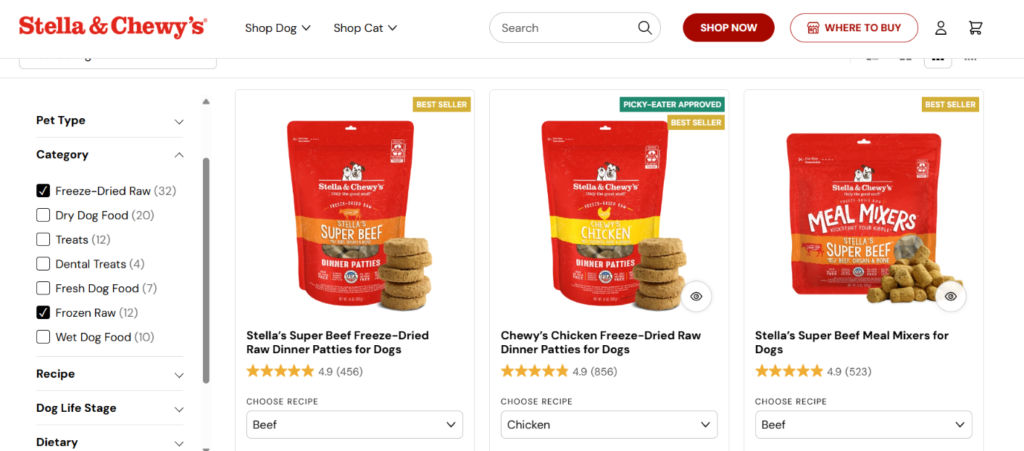
Stella & Chewy’s is one of the biggest names in raw, with wide retail availability and an unusually extensive freeze-dried protein lineup, including novel options like rabbit and venison. If you want to grab raw at your local pet store instead of subscribing online, they’re the easy pick.
Primal pairs its raw meats with certified organic produce and skips synthetic vitamin-mineral premixes entirely, a whole-food philosophy some owners specifically seek out. In addition to raw meat, Primal diets include fruits and vegetables, which means there’s a varying amount of carbohydrates in their diets. Keep in mind that dogs don’t need any carbohydrates. Their wild ancestors, such as wolves, ate very few carbohydrates and got most of their energy from prey, including muscle, organs, and fat. Primal is sold mainly through pet retailers.
Steve’s Real Food has been making raw dog food since 1998. It was the original commercial raw company, and its bulk 20-pound boxes are one of the most economical ways to buy frozen raw, at roughly $7 per pound. They offer a variety of raw and freeze-dried pet foods made from six main protein sources, beef, chicken, turkey, pork, lamb, and white fish, in complete meals, toppers, nuggets, and treats. But not all recipes are AAFCO-compliant, and the diets are all grain free, which may or may not be the best choice for your personal dog.
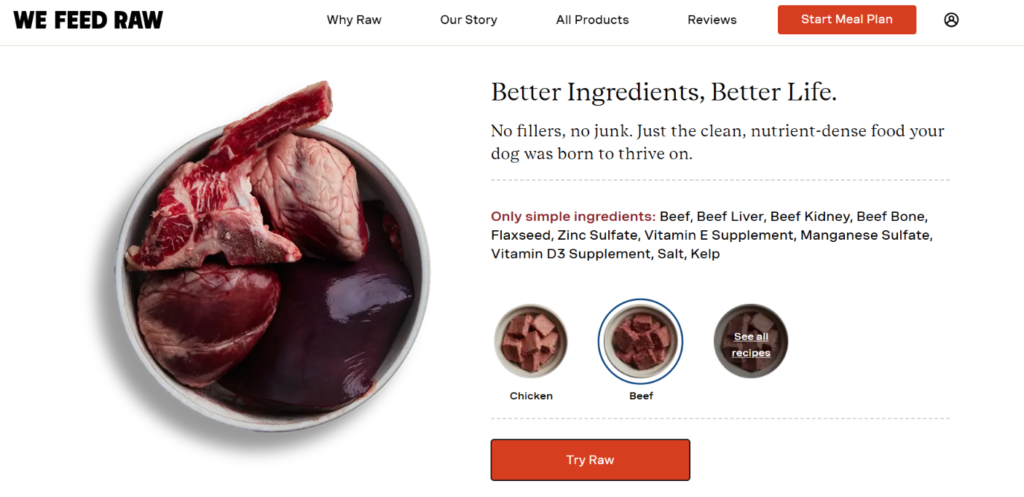
We Feed Raw is a nutritionally complete, high-protein, minimally processed diet that contains muscle meat, organ meat, ground bone, and essential vitamins/minerals. It contains no grains, fillers, artificial additives, or unnecessary carbs. It is a subscription-first option that offers five frozen proteins (beef, chicken, turkey, duck, lamb) plus freeze-dried beef and chicken. It’s Ph.D.-nutritionist formulated, meets AAFCO standards, is HPP-treated, portioned to your dog, and cold-shipped free.
All four companies are legitimate choices; the right one depends on whether you’d rather shop the freezer aisle, buy in bulk, or have it arrive portioned at your door.
So, Does the Math Work for Your Dog?
A raw dog food subscription is worth the cost when three things are true: You believe in the value of a minimally processed, high-protein diet without fillers; you don’t want the time, equipment, and food-safety burden of doing it yourself; and the monthly cost fits your budget without strain. If any of those aren’t true, you have other paths: a premium kibble, a topper-style raw plan, or careful DIY if you’ll commit to doing it right.
I recommend calculating the cost for your dog, starting with the trial box, and letting your dog and your budget cast the deciding votes.

- Raw Dog Food Subscription: Worth the Cost? A Vet’s Honest Breakdown - October 25, 2026
- Full Circle Farms vs. Smith Brothers: Which Local Home Delivery Service Is Right for You? - October 19, 2026
- The Best Fresh Dog Food Subscriptions: An Honest Breakdown - August 5, 2026