If you’ve lived in the Pacific Northwest for more than a few years, chances are that someone has tried to sell you on a local grocery delivery service of some kind at some point. And in Washington and Oregon, we’re a bit spoiled for choice when it comes to these services, which can make it hard to narrow down your options.
Take Full Circle Farms and Smith Brothers. Both are PNW companies with longstanding legacies, and both promise to simplify your to-do list with weekly deliveries.
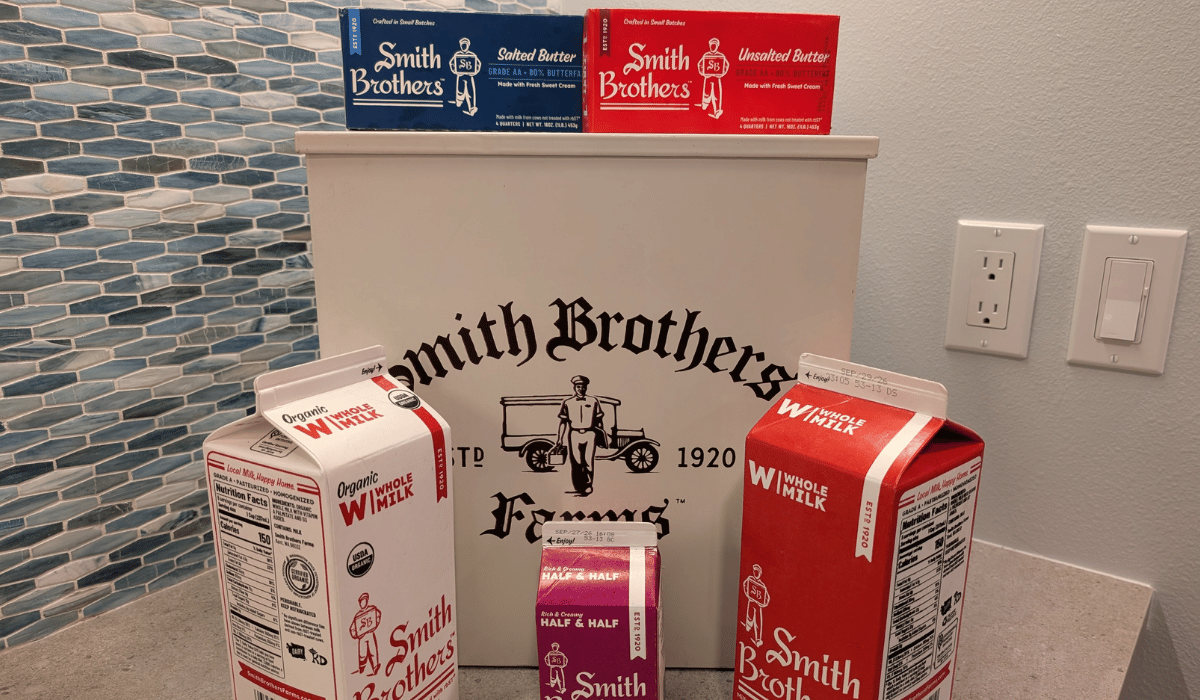
Full Circle Farms started in 1996 on five acres near North Bend, Washington, and today it delivers curated boxes of organic produce, picked seasonally from local farms. Smith Brothers goes back even further. It’s a fourth-generation, family-run dairy and grocery delivery service that’s been running neighborhood routes since 1920. Milk is still its primary product: the company processes and bottles its own milk at a facility in Kent, Washington, and gets it to your porch in as little as 48 hours. Despite that focus on milk, though, its catalog is surprisingly broad, with more than 600 grocery products, most of them locally sourced.
As you can imagine, these two services differ quite a bit. So read on to learn more about Full Circle Farms vs. Smith Brothers and which kind of lifestyle each is best for.
At a Glance: Full Circle Farms vs. Smith Brothers
| Full Circle Farms | Smith Brothers | |
| Founded | 1996, North Bend, WA | 1920, fourth-generation family business |
| Core product | 100% certified-organic produce boxes | Locally bottled milk and dairy, plus 600+ grocery items |
| Ordering model | Curated seasonal box you can adjust | Build your own cart from scratch |
| Customization | Swap items in and out, but your total can’t drop below your base box price | Full control; set each item to weekly, every other week, or this week only |
| Add-ons | Dairy, eggs, meat, honey, olive oil, and more (requires a produce box that week) | N/A; everything is à la carte |
| Local sourcing | Seasonal produce from local farms | 80%+ of the catalog is locally sourced |
| Delivery frequency | Weekly or every other week | Weekly on your route’s fixed day (skip or pause anytime) |
| Delivery window | Overnight, 7 p.m. to 7 a.m. | Fixed weekly day tied to your neighborhood route |
| Order cutoff | 48 to 72 hours before delivery | 2 p.m. the day before delivery |
| Driver | Varies week to week | Same route driver every week |
| Pricing | Set box price, varies by zip code (about $28.95 to $58.95 in my area) | Pay only for the items you order |
| Delivery fee | None, built into the box price | $4.99 on orders under $20; free at $20+ |
| Tips or service fees | None | None |
| Packaging | Add-ons arrive in insulated envelopes with ice packs | Free insulated porch box with your first order |
| Fixing problems | Self-serve credits toward your next delivery | Customer service replacements (same-day, in my experience) |
| Best for | Flexible eaters, fans of seasonal surprises, and remote areas like Alaska | Picky eaters, dairy and egg staples, and last-minute order edits |
Ordering and Customization
The ordering and customization process is where these two services differ the most.
It really comes down to curation vs. control: Full Circle hands you a seasonally curated, pre-built box and lets you make adjustments, while Smith Brothers gives you an empty cart and lets you build the whole thing yourself.
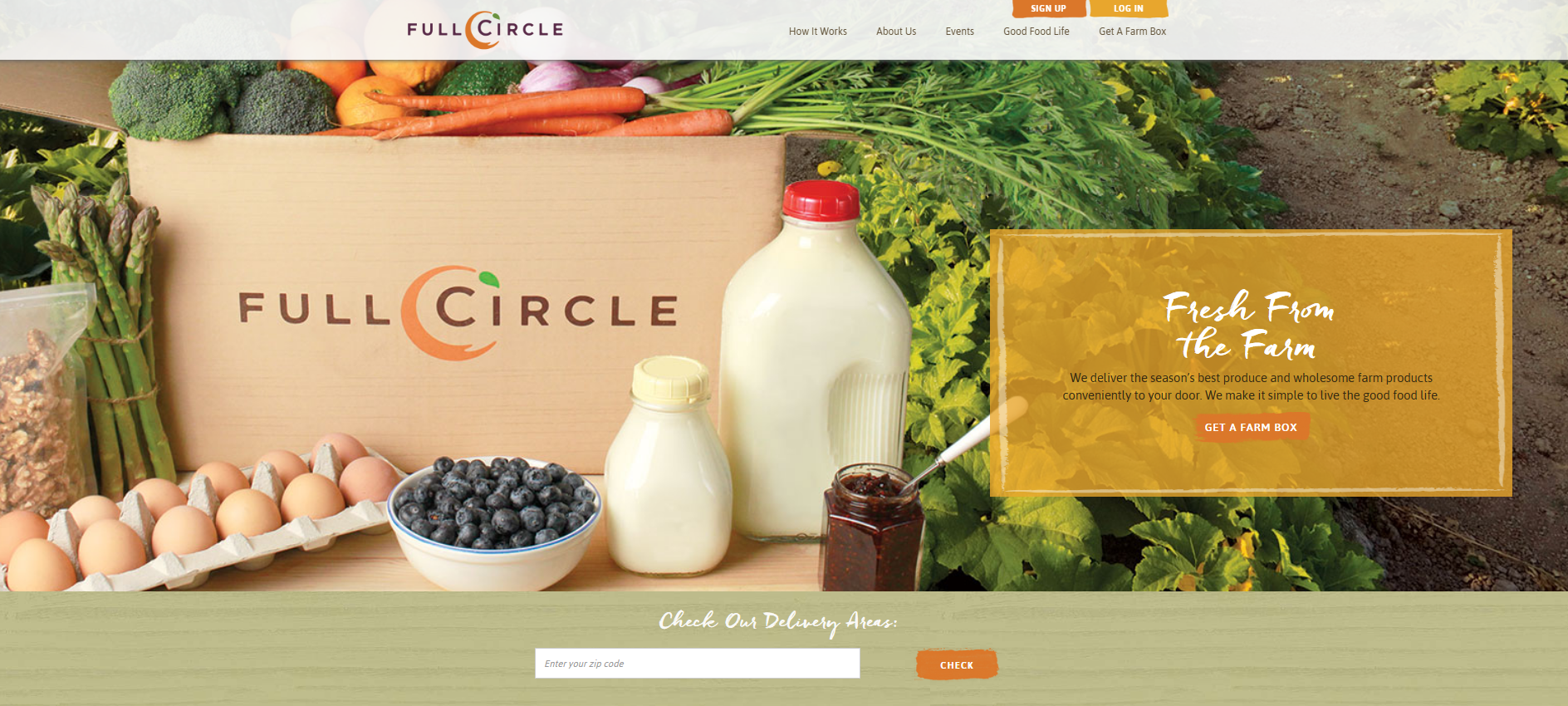
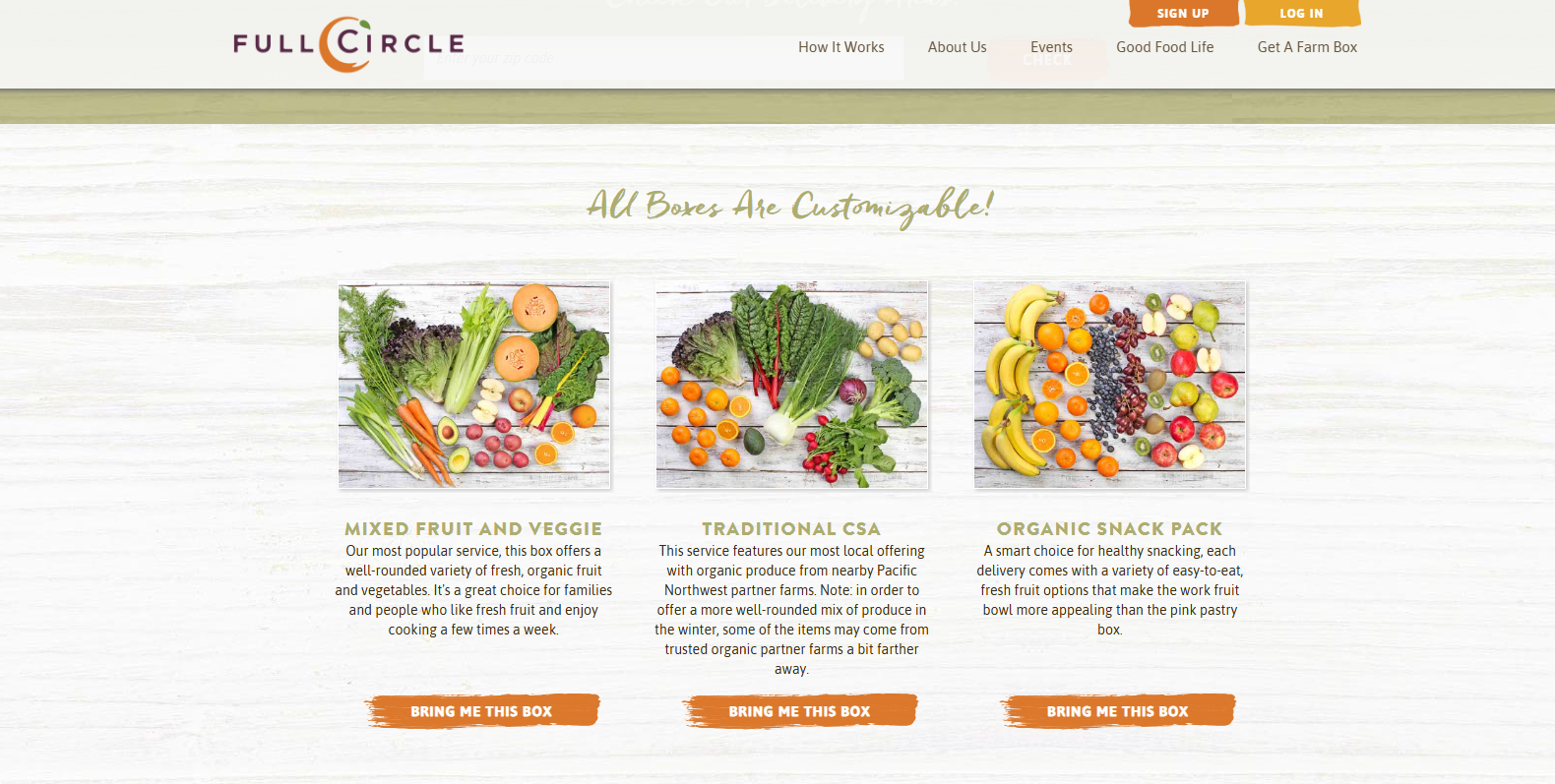
For example, Full Circle lets you pick a box type (like their Mixed Fruit and Veggie box or their Traditional CSA box) and a size within that type, and you just choose weekly or every-other-week delivery. Full Circle then fills your box based on what’s fresh and in season, and before each delivery, you can log into your account to swap items in or out.
Just keep in mind that each order’s total can’t drop below your base subscription price. You can add things, and once you’ve added enough, you’re allowed to remove other items, but you can’t simply shrink your box to save money. So if you have just one week where you need a little less produce, that can be tricky to maneuver.
Also, items like dairy, eggs, meat, and pantry items are available as well, but only as add-ons. You’re required to order a produce box before you can shop for them.
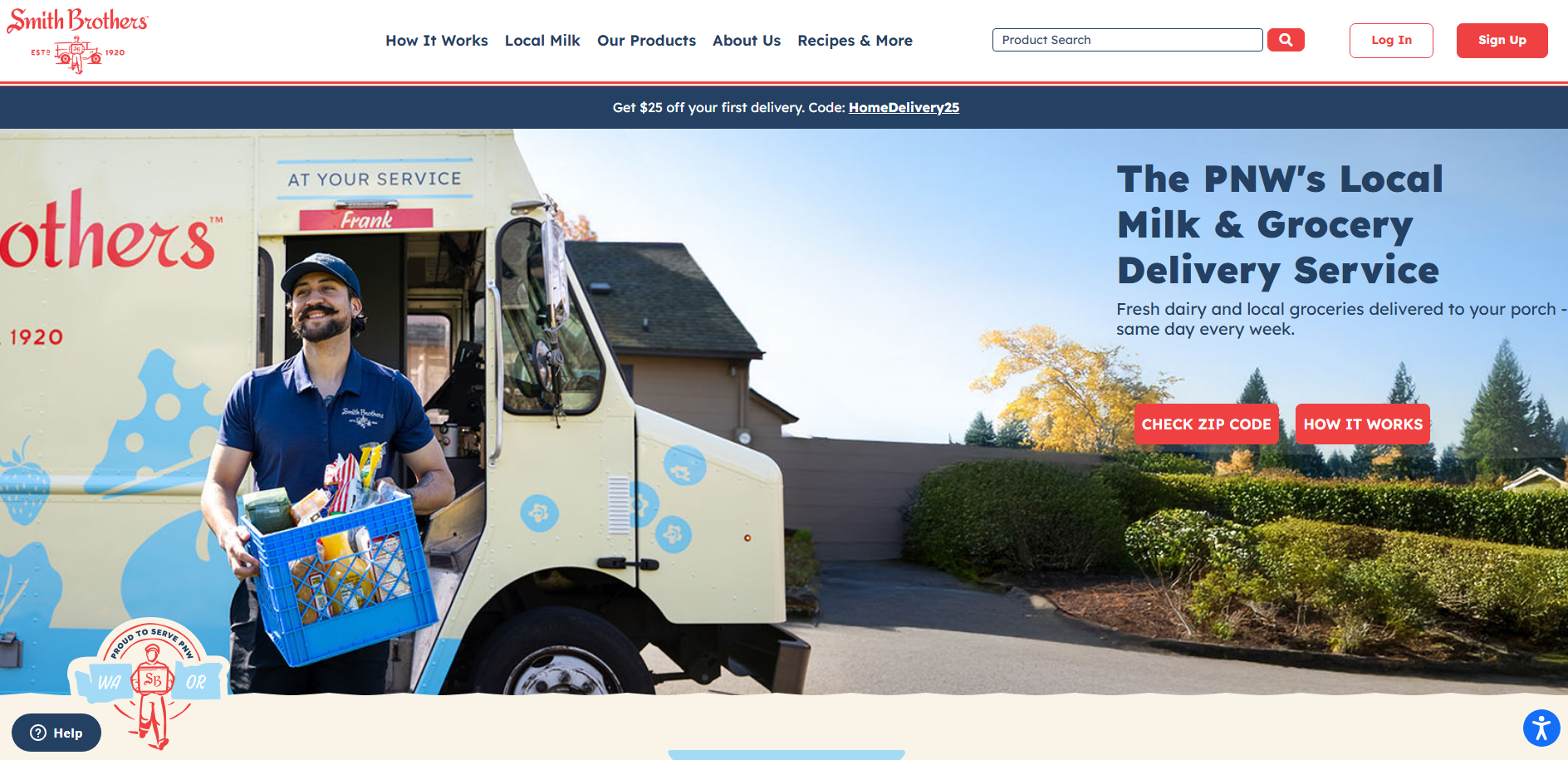
Smith Brothers works the opposite way. There’s no box size to pick and no required item; you just add whatever you want to your cart — from milk and eggs to cheese, locally baked bread, and even staples like chicken breast or ground beef — and edit it however you like right up until 2 p.m. the day before your delivery. You can also set every single item to either “Deliver every week,” “Deliver every other week,” or “Only deliver this week.”
However, delivery is only free with Smith Brothers if your order hits $20 before tax. Otherwise, you do have to pay a $4.99 delivery fee.
So if you’re someone who likes the idea of a curated surprise each week or is flexible about what ingredients you cook with, Full Circle’s model can save you time and be a lot of fun. If you’d rather know exactly what’s showing up on your porch with no questions asked, Smith Brothers gives you that level of control.
What Comes with Each Order
Full Circle’s core identity is 100% certified-organic produce, and that’s really the strongest aspect of this service.
Beyond the produce box itself, you can add dairy, pasture-raised eggs, sustainably raised meat, honey, olive oil, and other specialty farm products. If you do order any add-ons, they’ll arrive in insulated envelopes with ice packs alongside your produce box, so they’ll keep for a bit until you grab them off your porch.
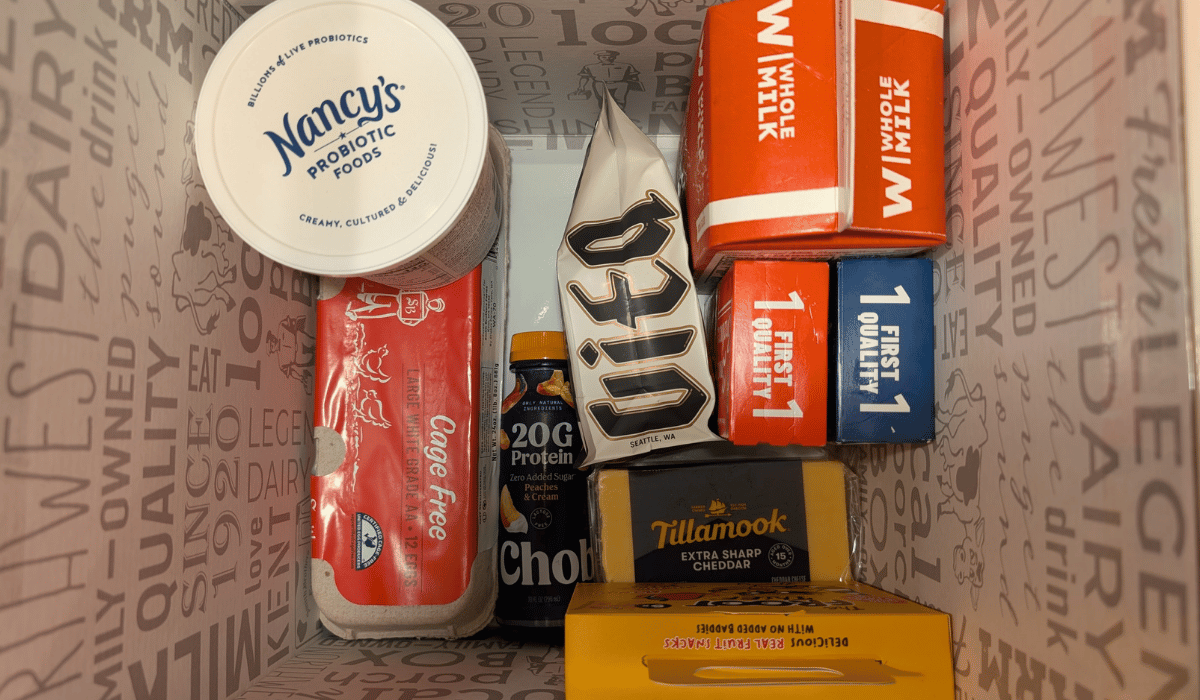
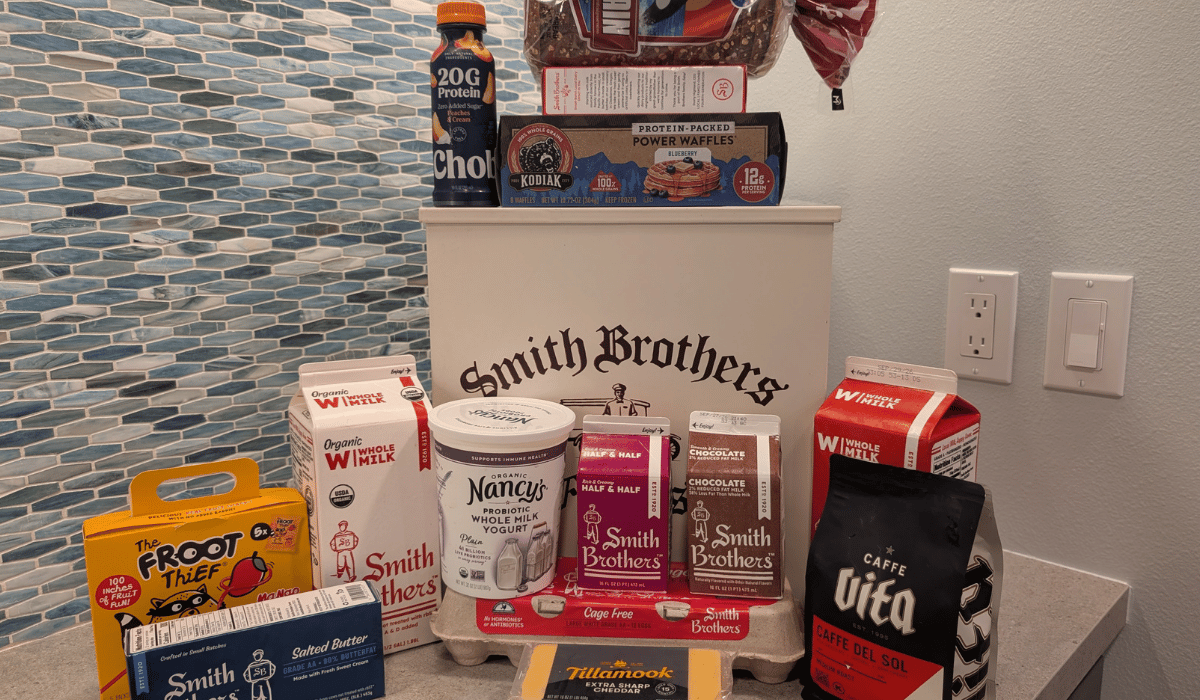
Smith Brothers, by comparison, feels more like a traditional grocery order than a produce box. The catalog spans more than 600 items, from the dairy staples the company is known for to eggs, bread, produce, meat, coffee, and local brand names you see on the shelves at PCC or Whole Foods. You also get a complimentary insulated porch box with your first Smith Brothers order so that everything stays cold until you have a moment to bring it inside.
More than 80% of what’s offered is locally sourced, which I personally love: We have some great farms and artisans here in the PNW, and I prefer to shop those brands whenever possible.
Delivery Logistics and Timing
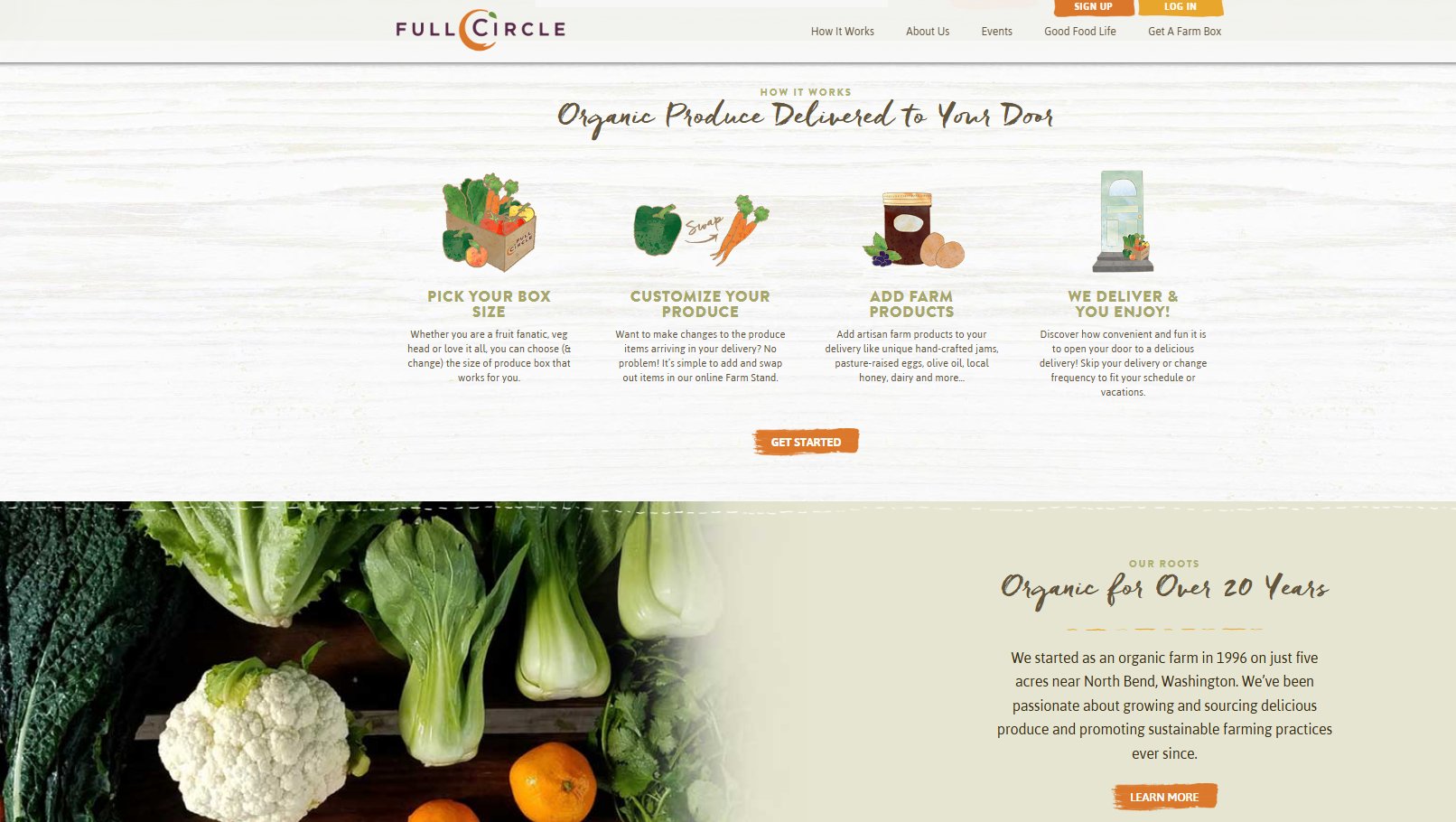
Full Circle’s deliveries arrive overnight, typically between 7 p.m. the night before and 7 a.m. on your delivery day. You won’t get a specific window beyond that 12-hour timeframe, and you won’t necessarily get the same driver twice.
Changes to your order need to be made 48 to 72 hours ahead of delivery, depending on your area, which can be a little tricky if you don’t know three days ahead of time whether you need more onions or potatoes.
If you live somewhere remote enough that fresh produce is challenging to get in-store (like parts of Alaska), Full Circle can be worth it purely for that aspect alone. In fact, Alaska orders are flown in rather than sent by barge to maximize freshness. You’ll pay a bit more than someone in Seattle or Portland for the convenience, though.
However, the produce from Full Circle has been hit or miss, in my experience. I’ve had carrots arrive already kind of wilted and bendy, and one time, I ordered a pound of potatoes and received a single, one-pound potato.
That said, I was pleasantly surprised the first time I had an issue with my produce from Full Circle. If something in your box falls short, whether it’s bruised produce or simply not what you needed, you can log into your account, flag the issue, and get an automatic credit toward your next delivery without ever picking up the phone. You can even get an entire box credited if it’s bad enough! It’s a painless way to rectify issues, and it beats sitting in a customer service queue for twenty minutes.
As for Smith Brothers, they run on a fixed weekly delivery day tied to your neighborhood route. It feels more like a classic delivery route rather than a rotating cast of gig workers; my deliveries come from the same driver, Dale, every single week.
The customer service is really good too. One week, Smith Brothers accidentally sent me 1% milk instead of 2%. I emailed customer service, and by 2 p.m. that same day, the correct carton was in my hands. I didn’t have to wait on hold or go to the store, and we were able to have our morning coffees and cereals the next day.
When it comes to the order cut-off time, you can edit your order until 2 p.m. the day before, which I often do. It’s really slick to be able to run low on milk Wednesday morning, add it to my order, and have the new carton the very next day.
The one thing I find odd about Smith Brothers deliveries is that you don’t get any kind of confirmation via email or text when your order is delivered. I had to set a weekly alarm on my phone after almost forgetting my delivery had come earlier that day!
Pricing and Fees
Full Circle’s pricing depends on which box type and size you choose. It also varies by zip code, so what you see at signup may differ from what a neighbor a few miles away pays.
In my own area, the options include:
- Organic Snack Pack (Mini size): $38.95
- Traditional CSA box (Sprout size): $36.95
- Mixed Fruit and Veggie box (Seed to Harvest size): $28.95 to $58.95
With each option, you can choose from weekly or biweekly delivery. There’s also no added fee for any delivery — it’s built into the price you pay for the box.
Smith Brothers doesn’t do the box-and-tier structure. Instead, you build a cart each week and pay for just those items. There’s a $4.99 delivery fee on orders under $20, and no fee once you cross that threshold.
Notably, neither company gives you a tip line to fill in for the driver, and there aren’t any service fees tacked on at checkout.
Ultimately, Full Circle Farms and Smith Brothers aren’t trying to be the cheapest option in your zip code, and you do pay for the convenience.
How to Decide Which One Fits Your Household
The way I would recommend you think about the Full Circle Farms vs. Smith Brothers debate is from the perspective that they’re built for very different households, not trying to serve the exact same role.
Full Circle makes sense if you’re
- Flexible about substitutions
- Excited by seasonal surprises
- Looking to simplify how you get organic produce
- Wanting access to artisan farm products like jams and oils
- Located somewhere that makes it hard to find local produce in-store
Smith Brothers makes sense if you’re more interested in:
- Encouraging picky eaters
- Having local dairy and poultry products like milk and eggs
- Avoiding certain produce due to texture or flavor preferences
- Being able to edit your order until the afternoon before delivery
- Having full control over building your grocery delivery, item-by-item
You don’t necessarily have to pick just one, either! My own grocery routine includes a local produce stand for the bulk of our fresh fruits and vegetables, plus Smith Brothers for dairy, eggs, and the staples we go through too quickly to buy in bulk during summer.
But during winter, when the produce stand is closed, we absolutely get both Full Circle and Smith Brothers deliveries each week. This gives us the best of both worlds — we can opt for a few seasonal surprises from Full Circle, while making sure our must-have staples and safe foods are always on hand via Smith Brothers.
Deciding on Full Circle Farms vs. Smith Brothers
There was a time not so long ago when I wondered whether grocery delivery could ever be worth it in the first place. Now that I’ve seen how much time I can save each week, I’m all-in on finding the right services for my household.
When it comes to the Full Circle Farms vs. Smith Brothers debate, I have to say, I don’t think of them as an either-or choice. They’re more like two different answers to the same question of how to spend less time at the grocery store — and the right answer depends on what matters to you.
Full Circle hands you a curated, produce-first box with a lot of flexibility to add and edit, but not full control over every item. Smith Brothers gives you a grocery cart with total control and access to not just their dairy products, but a smaller variety of organic produce than Full Circle.
So the right pick depends almost entirely on how particular your household is about what ends up on the table. Once you think about how these dietary preferences connect to the groceries you buy, the best option should become clear!