
I’ve spent some time perusing the many discussions on Reddit detailing the pros, cons, and everything in between on the different types of food you can feed your beloved fur children. While I initially saw high-pressure processing (HPP) as a blanket safety procedure for raw dog food, the truth is that I didn’t really understand it properly until I started digging into commercial raw dog food brands and the latest controversies with some brands’ voluntary recalls and their transition to HPP.
From doing extensive research, I realized that not only does HPP matter more than I first thought, but it’s also relevant for many of the other things I buy in the grocery store! I’ve noticed plenty of discussion on the topic of HPP lately, so I decided to do a little dive into it and share everything that I’ve learned.
Quick Look at the Terminology (For The Skimmers)
Not everyone has time for a full deep dive, so here’s a simplified way to think about how safety is handled across commercial raw dog food:
| Safety Feature | What It Means |
| HPP Processing | Extreme cold water pressure eliminates pathogens without heat or cooking |
| Third-party testing | Independent lab testing for contamination |
| Batch-by-batch testing | Every batch tested before shipping |
| HACCP Program | Food-industry grade safety protocol followed throughout production (Hazard Analysis and Critical Control Point) |
| AAFCO Compliant | Meets complete and balanced nutritional standards set out by the Association of American Feed Control Officials |
| No fillers or artificial preservatives | Cleaner, minimally processed product |
So, What Is HPP?
HPP stands for high-pressure processing, and while it may sound technical, the idea is pretty simple once you strip it back.
The thing that surprised me the most is that it’s not something the pet food world came up with. It’s an FDA- and USDA-approved food safety method that’s used all over the human food industry, too. Things like cold-pressed juices, packaged deli meats, and even the ready-made guacamole you grab at the supermarket. A lot of the food you already eat without a second thought has been through this exact process.
Instead of using heat to deal with bacteria like Salmonella or E.coli, HPP uses pressure. A lot of pressure. The food is sealed, put into a chamber, and exposed to pressure levels similar to what you’d find deep in the ocean. That pressure does the job of reducing pathogens, but without cooking the food. The nutritional profile stays intact or unchanged, and the pressure helps eliminate bacteria.
Why HPP? Well, cooking changes food. HPP doesn’t. It handles the safety side of things without heat getting involved, so the food stays raw.
And just to answer the question that’s probably sitting in the back of your mind – yes, the process is completely safe for dogs. The pressure doesn’t leave anything behind. There’s no chemical treatment, no irradiation, nothing added at any point. It’s just pressure, and then it’s done.
One more thing worth knowing, because it doesn’t get said enough: HPP is not unique to raw pet food. It’s a mainstream food safety tool that’s been trusted in human food production for a long time.
Why Don’t All Raw Brands Use It?
HPP isn’t cheap. The equipment is expensive to buy, operate, and maintain, and running every batch through the process adds real cost per unit. For smaller brands, especially, that’s not always a straightforward call to make. Some manage it by working with outside facilities that handle the processing for them, though that brings its own complications around timing, logistics, and consistency. Others make the decision that their sourcing standards and handling practices are strong enough to stand on their own without it.
There’s also a small corner of the raw feeding world that feels that HPP-treated food is somehow “less raw,” that the pressure affects it at a level that you can’t see. This isn’t backed up by mainstream food science, but the view exists, and some brands have built their identity around it.
Here’s my takeaway, though. None of that automatically makes a brand unsafe. What it does mean is that without HPP, everything else in the process has to be working properly, every single time. The sourcing has to be solid. The handling has to be careful. The testing has to be consistent. HPP is doing a real job in the safety chain, and when it’s not there, something else has to fill that space. It’s just worth knowing what that something else actually is before you commit.
That’s not a knock on brands that don’t use it. It’s just an honest look at what the absence of it means for the rest of the process.
What It Looks Like When a Brand Goes Further
This is the part that got my attention when I started looking more closely at commercial raw brands.
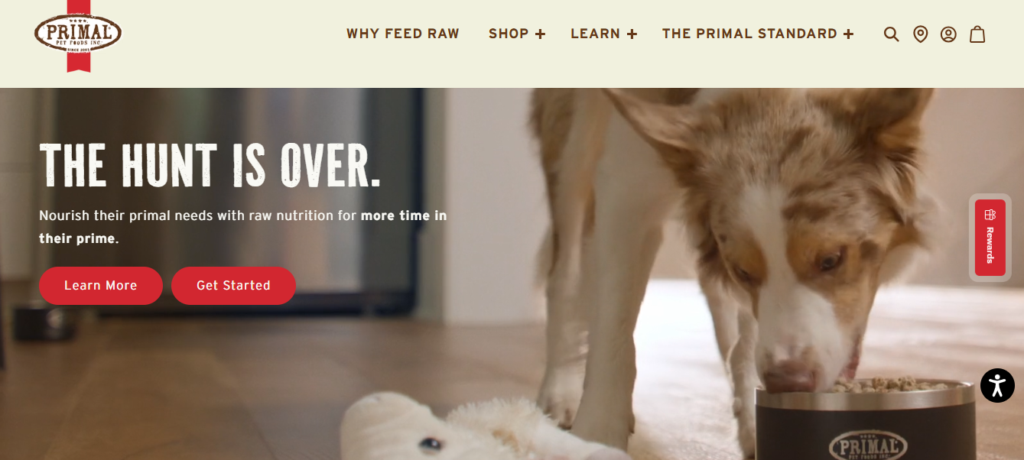
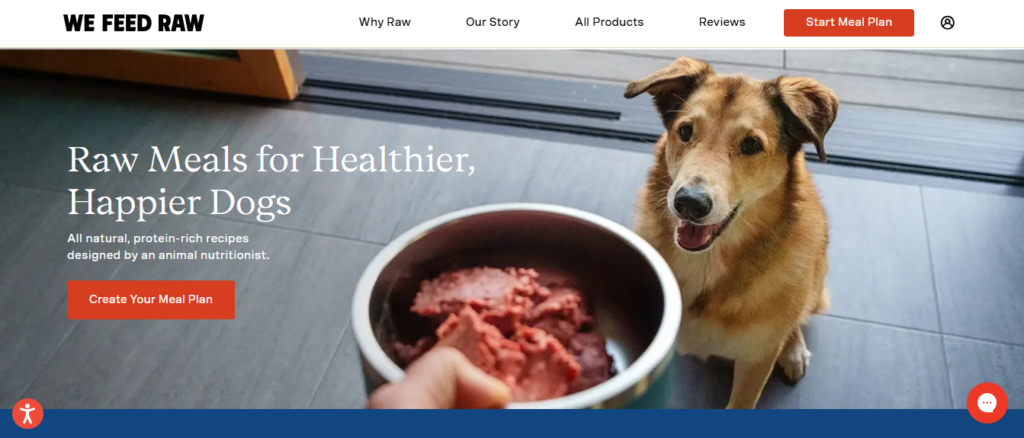
A lot of brands can point to one thing they do well. HPP, or careful sourcing, or clean ingredients. Primal Pet and We Feed Raw use HPP as a standard part of their process, but I know that We Feed Raw doesn’t rely solely on HPP. After HPP, every single batch is sent to an independent lab for testing before anything ships.
There’s something refreshingly straightforward about that. Either the food passes, and it ships, or it doesn’t, and it stays put.
Then there’s the Clean 16, which I found genuinely worth paying attention to precisely because it comes from completely outside the brand. The Clean Label Project is an independent organisation that does its own contaminant testing across pet food products. We Feed Raw was named on the Clean 16, putting it among the top 20% of the cleanest pet foods tested in the country. Making it on an independent list like the Clean 16 is an external validation that carries a little more weight than a brand’s own marketing.
So when you put those three things together (HPP processing, mandatory pre-shipment batch testing, and independent external validation), you’re not looking at one single safety feature. You’re looking at several layers working together. I think it’s safe to say HPP is a standard set in the production process that signals a brand is worth looking into. If they are not using HPP, I’d be curious to see what else they are doing to ensure their food isn’t contaminated.
If You’re Looking at Raw Brands, Here’s What’s Worth Checking
Knowing what to look for makes this a lot less overwhelming than it seems from the outside. Most of the information you need is right there on a brand’s website if you know what you’re looking for. Usually under pages like “our process,” “safety,” or “how it’s made.”
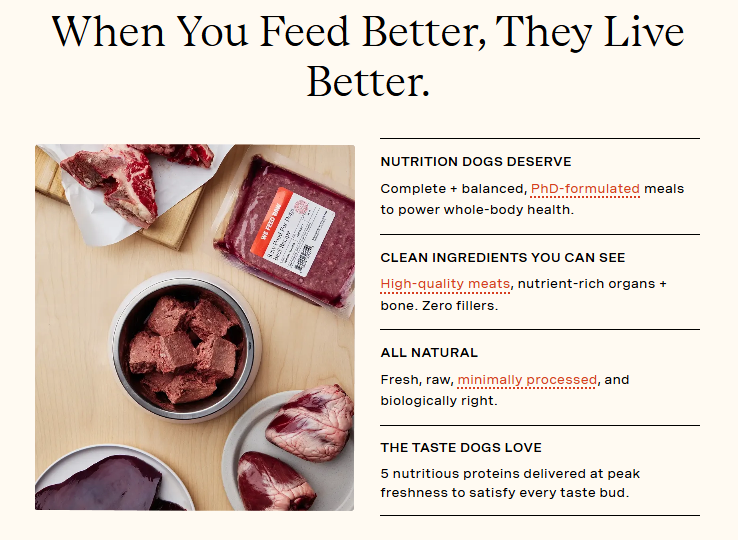
- Does the brand use HPP? It tells you something real about how food safety is being taken seriously at the production level, not just in their marketing language.
- Is there third-party testing? Testing every batch before shipment is a very different thing from occasional internal checks. Look for specifics, not just the claim. If a brand is third-party tested, the results should be easy to find. And remember, third party means third party- not internally tested! The results should be a non-biased representation.
- Has anyone outside the brand validated their safety claims? Independent recognition from organisations like Clean Label Project carries weight precisely because the brand has no say in what gets published.
- How transparent are they about ingredients and process? A brand that’s confident in its ingredients and process tends to make that information easy to find rather than something you have to dig for.
These aren’t complicated questions, and they don’t require insider knowledge to understand what it means (or why it means anything at all). But they’re definitely the ones worth asking when you’re deciding what goes in your dog’s bowl every day. Once you know what to look for, finding the answers is usually pretty quick. And the brands that are doing things properly tend to make it pretty easy.
One Last Thing
I started looking into fresh food brands because of my own dog, and I found that the conversation around it is a lot more straightforward than it’s sometimes made out to be. Commercial raw, done properly, with real safety processes and independent validation behind it, is a very different product from what most of the cautionary headlines usually talk about.
And once you know what questions to ask, the whole thing gets a lot less complicated.
I’ve seen the changes in my own dogs, and I couldn’t be happier.

- HPP vs Non HPP Raw Dog Food - April 17, 2026
- We Feed Raw vs Farmer’s Dog Cooked Food: What Actually Works for Your Dog - January 9, 2026
- Top Ollie Dog Food Subscription Alternatives - November 28, 2025