


- What Subscription Box Companies Should Look For In Shipping Software
- Best Shipping Software for Subscription Boxes (2026 Comparison Chart)
- 1. Shippo: Best for Ease of Use and Automation
- 2. ShipStation: Best for Enterprise-Level Operations
- 3. ShippingEasy: Best for Basic Carrier Options
- 4. Easyship: Best for International Retailers
- 5. Pirate Ship: Best For Early-Stage Subscription Startups
- Why We Recommend Shippo for Subscription Box Businesses?
FTC Disclaimer: We do make money from this blog and may receive compensation for this work in the form of commissions, fees and complimentary product access. Review our full FTC disclosure here.
Subscription box business owners face an entirely different set of order fulfillment challenges than traditional ecommerce shops.
The average online retailer usually processes orders steadily throughout the week, including shipping different-sized and weight packages, and even fulfillment timelines.
Subscription brands, on the other hand, generally fulfill hundreds or even thousands of orders during a very short window, monthly or quarterly. To avoid customer service nightmares and churn, it’s important that subscription retailers do everything possible to avoid late shipments, manual mistakes and over-paying for carrier rates.
Third-party shipping software service can help to mitigate errors, make fulfillment easier with automation options, and pass on deep carrier discounts across multiple carriers.
What Subscription Box Companies Should Look For In Shipping Software

Batch Processing and Printing
You already know you need bulk label printing, but the real differentiator is how fast things break at volume. Look for platforms that handle 10,000 or more labels without throttling, and pay close attention to error recovery.
When one address fails validation mid-batch, does the whole job stall, or does the software flag the problem and continue processing the rest? That alone can save hours on ship day and is worth asking vendors about directly before committing.
Automation Logic
Basic carrier assignment by weight and package size is table stakes at this point.
What separates good platforms from great ones is how they handle exceptions. Look for software that routes problem orders to a human review queue rather than silently defaulting to the most expensive available option.
That default is one of the most common places shipping margin disappears, and most businesses do not catch it until they are already deep into a contract.
Multi-Carrier Options With Discounted Rates
Discounted rates are widely advertised across nearly every shipping platform, but the more important question is whether you are seeing the actual rate at the time of purchase, or an estimate that adjusts after the fact.
Dimensional weight recalculations and fuel surcharge timing are two areas where subscription box companies consistently get surprised by unexpected costs.
Before choosing a platform, confirm that the rates displayed are real-time and final, not ballpark figures that get trued up later.
Scalability
Do not just ask whether a platform can handle your future volume. Ask what happens to your price when you get there.
Many platforms offer attractive entry-level pricing that increases sharply at higher shipment tiers. It is worth modeling out your expected cost at two times and five times your current volume before signing anything, because a platform that looks affordable today can become a margin problem faster than most businesses anticipate.
Integration Compatibility
Verified platform partnerships matter more than a general claim of broad compatibility.
An unofficial or community-built integration means your team owns the troubleshooting when something breaks, and it will typically break during your busiest fulfillment window rather than a slow period.
When evaluating platforms, ask specifically who is responsible for maintaining the integration when your ecommerce platform pushes an API update, and get that answer in writing if possible.
Analytics and Reporting
The most overlooked metric in shipping analytics is carrier-level on-time performance broken down by region.
Aggregate on-time delivery rates can look acceptable at the surface level while one carrier is consistently failing customers in a specific geography every single month.
Look for platforms that allow you to filter delivery performance by carrier, shipping zone, and time period. That level of detail is what actually informs smarter carrier decisions over time.
Best Shipping Software for Subscription Boxes (2026 Comparison Chart)
| Platform | Best For | Carrier Access | Batch Label Processing | Pros |
| Shippo | Ease of use & automation | 40+ domestic & international carriers | Up to 100 labels at once (more via API) | Advanced workflow automation, strong reporting and operational visibility |
| ShipStation | Enterprise-level operations | Extensive multi-carrier support | High-volume batch fulfillment | Extremely easy setup and onboarding. Built-in marketing and customer segmentation tools |
| ShippingEasy | Small US-based subscription brands | USPS, UPS, FedEx, DHL | Good for moderate recurring volumes | Access to 550+ global carriers, automated duties and tax calculationsStrong customs and compliance tools |
| Easyship | International subscription retailers | 550+ global carriers | Strong bulk shipping support | Very simple and easy to use, Competitive USPS and UPS discounts |
| Pirate Ship | Early-stage subscription startups | USPS & UPS only | Simple batch label creation | Very simple and easy to use Competitive USPS and UPS discounts |
1. Shippo: Best for Ease of Use and Automation
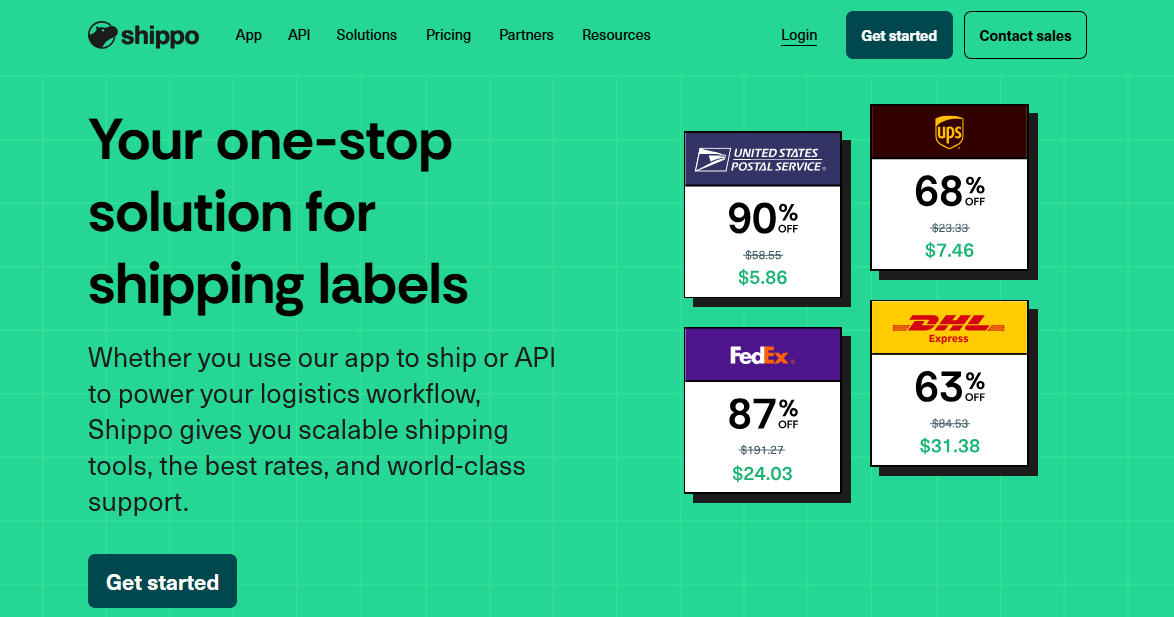
Shippo is a strong fit for subscription box companies that need reliable batch processing without a steep learning curve. The platform connects merchants with over 85 carrier services worldwide and offers discounted shipping labels, batch label printing, automated workflows, and branded tracking pages, all managed from a single dashboard.
Shippo not only provides access to 40+ carriers, it passes along its deeply discounted negotiated rates.
Subscription box businesses need to fulfill orders fast, especially when there are hundreds or thousands of orders going out on a very tight timeline. Shippo pulls order data directly from your connected store, lets you generate and print labels in large batches, and automatically populates tracking in your dashboard once packages ship.
Its automation rules allow you to assign carriers, services, and packaging preferences based on predefined criteria, which removes a significant amount of manual decision-making when you are processing hundreds of orders at once.
On pricing, Shippo is transparent and structured around actual usage. The Starter plan is free for up to 30 labels per month, the Professional plan starts at $19 per month and supports up to 10,000 labels per month with five user logins, and the Premier plan offers custom pricing for unlimited shipments.
Also, if detailed carrier-level performance reporting by region is a priority for your team, it is worth requesting a demo specifically to evaluate that feature before signing up.
Pros
- Batch label printing for high-volume orders, with access to 85 or more domestic and global carriers
- Free starter plan with 30 labels per month and API access included at all plan levels
- Automation rules for carrier and packaging assignment reduce manual intervention at scale
Cons
- Reporting and analytics are less granular than enterprise platforms, which matters as your data needs grow
- Businesses planning to manage multiple brands, hybrid fulfillment models, or complex supplier relationships may find they outgrow the platform faster than expected
2. ShipStation: Best for Enterprise-Level Operations
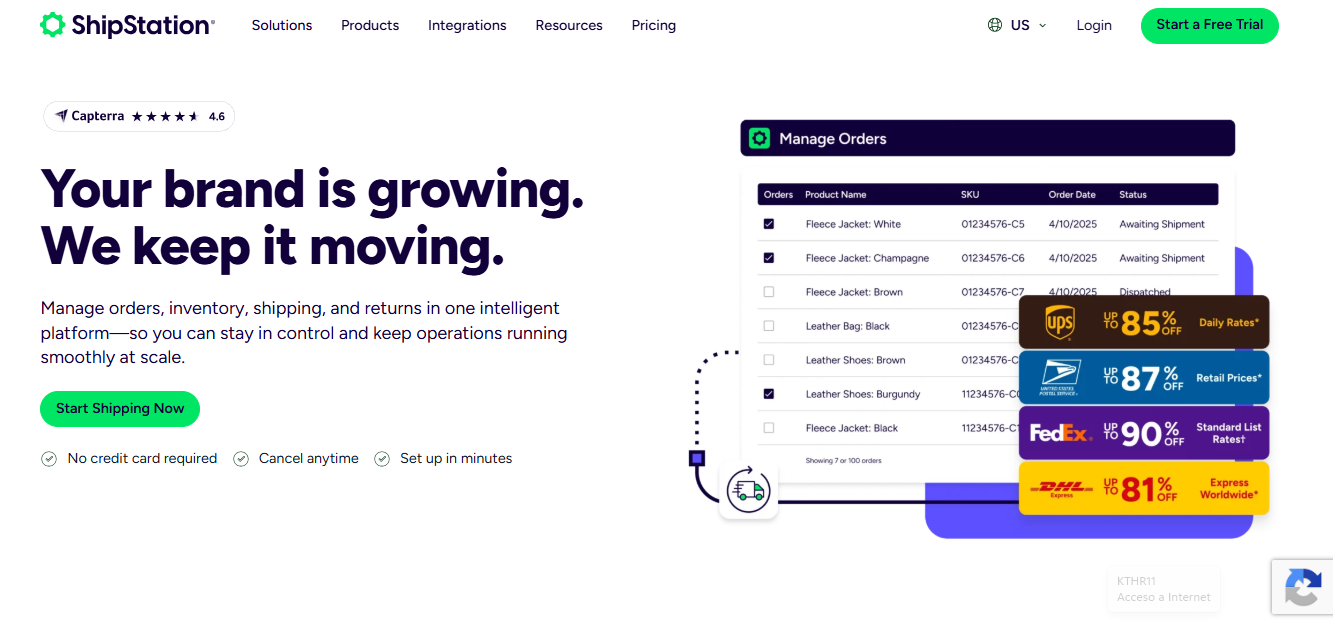
ShipStation is built for subscription box companies that have grown past the point where basic batch printing and simple automation rules are enough.
If you are a large-scale subscription box retailer with multiple storefronts, warehouses, or sales channels that ship thousands of packages of different sizes and weights depending on the subscription each month or quarter, ShipStation offers detailed shipping automations for carrier selection logic according to package size and destination, along with tracking and reporting.
As one of the oldest shipping platforms on the market today, it has scaled into a shipping platform giant for companies that ship equally giant volumes. And if your business is not quite an enterprise size, but close, the platform offers multiple tiered pricing plans that unlock a multitude of automations and reporting features as your need grows.
The platform is relatively easy to use for both regular users working in the UI and advanced users working through the API, but getting full value from the automation and reporting features typically requires dedicated time and, at larger scales, technical resources.
Some users have also flagged inconsistent support responsiveness when integration issues arise, which is worth factoring in if your team does not have internal technical support.
Pros
- Advanced workflow automation and rule-building for large volume shipments
- Strong operational reporting and visibility for multi-team use
- Extensive multi-carrier support
- Highly customizable shipping workflows
Cons
- Interface can be overkill for smaller teams
- Learning curve is steep
- Hidden costs and tiered pricing can quickly add up
- May need a developer on staff to fully utilize advanced feature sets for
3. ShippingEasy: Best for Basic Carrier Options
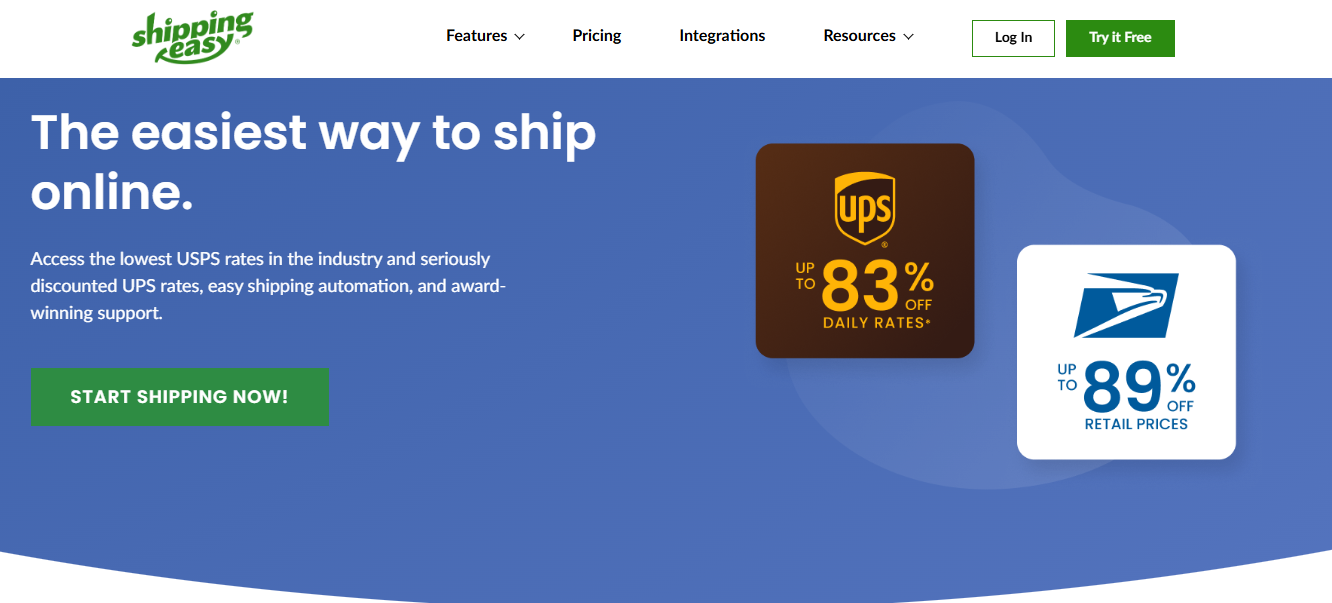
ShippingEasy is a great option for subscription box companies operating primarily within the US and do not need access to a range of carrier options.
While the platform only offers real-time views and only supports four major carriers: USPS, UPS, FedEx, and DHL, its beginner-friendly, easy-to-navigate interface makes it a great fit for smaller subscription box retailers.
One standout feature for subscription box companies specifically is ShippingEasy’s built-in email marketing and customer segmentation tools. Most shipping platforms stop at the label, but ShippingEasy pulls customer data directly from your order history, which means you can build targeted email lists without exporting spreadsheets or paying for a separate email tool.
It’s not a replacement for a dedicated email platform like Klaviyo or Mailchimp if you are running sophisticated flows. But for a small to mid-sized subscription box company that wants basic lifecycle communication without stitching together another integration, having it built into the same system you are already using for fulfillment removes real friction.
That said, both the shipping and marketing capabilities are fairly limited compared to more advanced platforms. For subscription businesses planning to scale quickly, customize workflows, or expand internationally, those limitations can become noticeable over time.
Pros:
- The Starter plan is free for up to 25 shipments per month
- Built-in email marketing means post-shipment updates and winback campaigns live in the same platform as your labels
- Automation consolidates orders from multiple stores quickly
- Inventory management is built in
Cons:
- Carrier options are limited to USPS, UPS, FedEx, and DHL
- Customer support is frequently reported as unresponsive
- Advanced features are locked behind higher-tier plans
- Some users report system crashes and instability
4. Easyship: Best for International Retailers
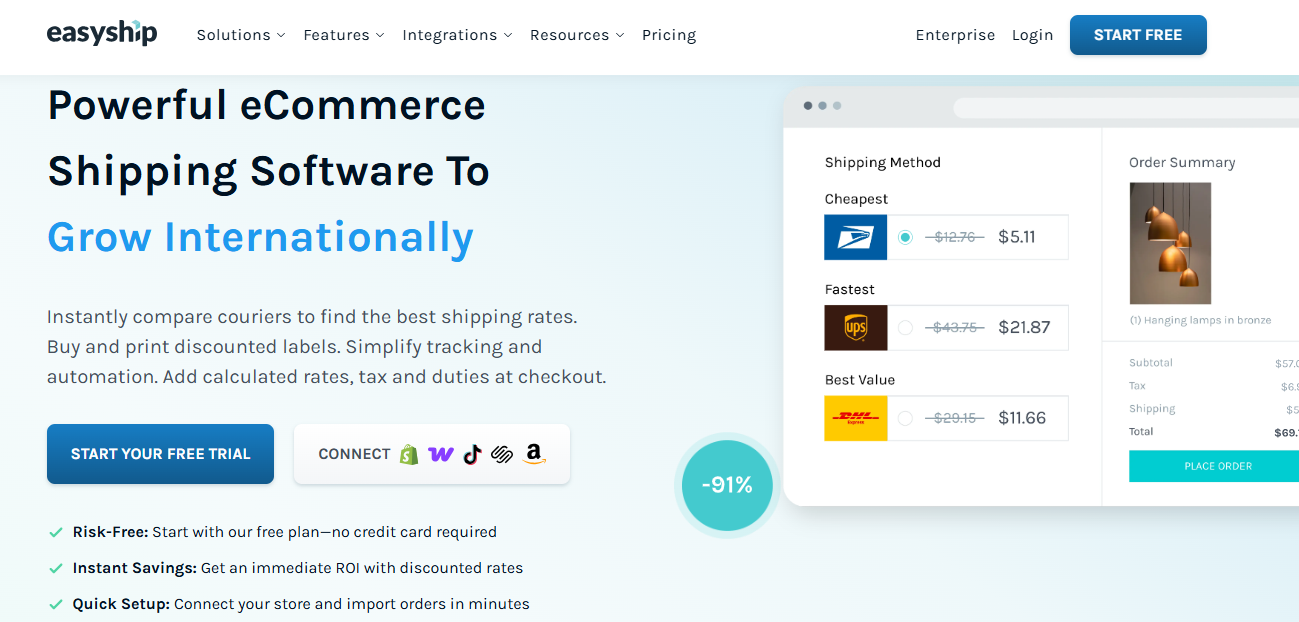
Easyship was built for companies that primarily ship internationally. It takes the guess work out of cross-border fulfillment from customs paperwork to duties calculations to taxes, carrier restrictions, and fluctuating delivery timelines.
Easyship automatically calculates customs duties and taxes for every destination country, generates the required tax documents, and lets you decide upfront whether the customer or the seller will cover any applicable charges. That means international subscribers see a complete landed cost before they commit to a subscription, which removes the surprise fees at delivery that tend to drive cancellations.
The platform automatically compares hundreds of courier services to identify the most cost-effective option for each shipment, which is useful when your subscriber base spans multiple countries with different carrier networks and delivery standards.
All that being said, if the majority of your subscribers are domestic, Easyship is more platform than you need. Ideally, its strengths are purpose-built for cross-border complexity.
Pros
- Duties, taxes, and customs documents are calculated and generated automatically for every country
- Comparison across 550 or more couriers per shipment helps control international shipping costs
- Supports both Easyship’s pre-negotiated rates and your own carrier accounts simultaneously
- Free tier available for low-volume shippers testing international fulfillment
Cons:
- Not a practical fit for subscription box companies shipping primarily within the US
- Phone support is only available on the Premier plan and above
- Advanced features, including API access and global fulfillment tools require higher-tier plans
- Some users have reported unexpected plan upgrades, so reviewing your billing tier regularly is worth the habit
5. Pirate Ship: Best For Early-Stage Subscription Startups
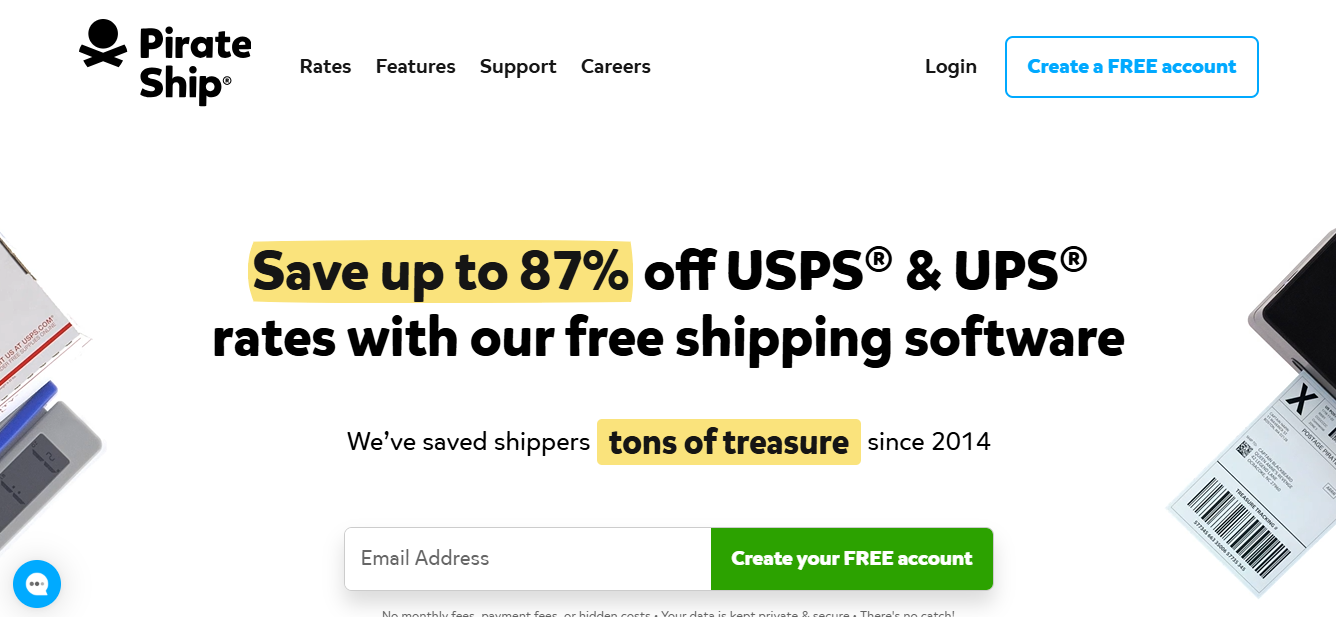
Pirate Ship is the most straightforward option on this list. The software is completely free to use, with no subscription fees, no markups, and no minimum volume requirements.
You pretty much pay only for postage. So, for a subscription box company in its early stages and is not ready to invest in a full platform, it is a practical starting point.
Batch label creation is supported. Orders import automatically from connected stores, including Shopify, Etsy, eBay, Amazon, and WooCommerce, and you can print multiple labels at once.
Keep in mind, if you are planning to scale your business, you may find that you will quickly outgrow the platform. Some users mentioned that uploading large spreadsheets or creating large data transfers from ecommerce sites can be very clunky and does not always work well.
Also, Pirate Ship covers USPS and UPS only. So, if your shipping strategy ever requires FedEx, DHL, or regional carriers, you will need to migrate to a different platform entirely.
For subscription box companies planning to scale or expand their carrier mix, that migration is worth factoring into your timeline sooner rather than later.
Pros
- Completely free to use with no monthly fees, markups, or hidden costs
- Commercial USPS discount rates are available to all users, regardless of volume
- Batch label printing with direct integrations to major ecommerce platforms
- Minimal setup with very little onboarding required
Cons
- Carrier selection is limited to USPS and UPS, with no FedEx, DHL, or regional carrier options
- No rule-based automation for carrier selection or rate shopping across multiple carriers
- Branded tracking pages and proactive customer-facing notification emails are not available natively, which matters as your subscriber base grows
- Platform is likely to feel limiting as order volume and operational complexity increase
Why We Recommend Shippo for Subscription Box Businesses?
Before signing up for any platform on this list, get specific about three things: your current monthly shipment volume, your expected volume in 12 months, and whether the carriers you need are actually supported.
For most subscription box businesses, Shippo hits the right balance. The free starter plan removes the barrier to entry, the pricing scales predictably as your subscription volume grows, and the batch label tools and automatic tracking updates are built for exactly the kind of high-volume fulfillment cycles that subscription businesses run on.
If you are evaluating platforms and not sure where to start, Shippo is where we would point you first.
But if you’re still unsure, try treating your first 90 days on any new platform as a test. Track your actual time spent on fulfillment, your cost per shipment, and any carrier exceptions or errors that required manual intervention.

- Best Shipping Software for Subscription Boxes - May 30, 2026