

There are a number of reasons that a home coffee drinker might opt for a multi-roaster coffee subscription, one of them being that it’s an easier way to discover new roasters and try new coffees you might never have found on your own.
Trade and Bean Box both work with curated networks of dozens of hidden-gem, independent roasters from across the country and ship their coffees directly to your door. Each model boasts an expansive catalog of both roasters and coffees, guaranteed freshness, and plenty of variety.
But how exactly do they select each coffee for your subscription, and do you want personalized picks, or would you rather explore broader categories?
This comparison breaks down the differences between Trade and Bean Box that matter most to a home coffee drinker, including:
- Variety: how large their catalog is, how many roasters they work with, etc.
- Personalization: how are coffees selected, what preferences can you specify, etc.
- Espresso Options: is there a dedicated espresso category, can you mix & match, etc.
- Pricing: how much you pay per bag, is shipping included, etc.
- Subscription Flexibility: what happens if you need to pause or cancel, can you adjust your taste preferences, etc.
Let’s take a look at how the two compare and see which one is better suited for your needs!
Trade Coffee vs. Bean Box (At a Glance)
| Variety | Personalization | Espresso Options | Pricing | Subscription Flexibility | |
| Trade Coffee | 500+ coffees from 55+ roasters | Each coffee is matched to the subscriber’s taste profile based on quiz answers | Can be specified as a preference; also available as a collection | $16.99 – $21.99 per bag | Swap/repeat/ rate coffees, pause/cancel, and adjust preferences at any time |
| Bean Box | 650+ coffees from 60+ roasters | Curated selection of coffees depending on subscriber’s preferred category | Available as a category, ~129 coffees | $19.50 – $21.50 per bag + shipping | Change category, pause/cancel at any time |
Overall Pick: Trade Coffee
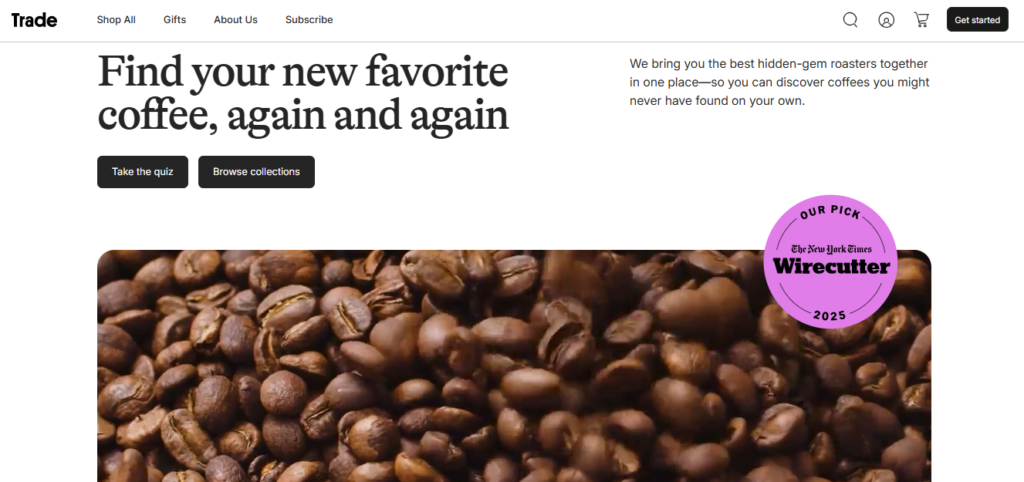
If you’re ready to cut to the chase, Trade comes out as the stronger overall subscription when weighing all five criteria together.
Keep reading: What is Trade Coffee Really About? – Reviewed by a Coffee Expert
While Bean Box technically has a larger catalog of both coffees and roasters, the difference in size isn’t necessarily large enough to make a significant difference. Trade pulls ahead in several categories that affect the actual week-to-week experience, including personalization, pricing, and flexibility.
Their quiz-driven matching system adapts to a subscriber’s specific palate over time rather than sorting them into a fixed category, and their dashboard gives subscribers control over what shows up in each delivery.
If you don’t mind being assigned to a broader category the way Bean Box does, their model can be a great way to quickly expand your palate. But if you already know what you do and don’t like and want to learn more about your preferences, Trade is the complete package.
1. Variety
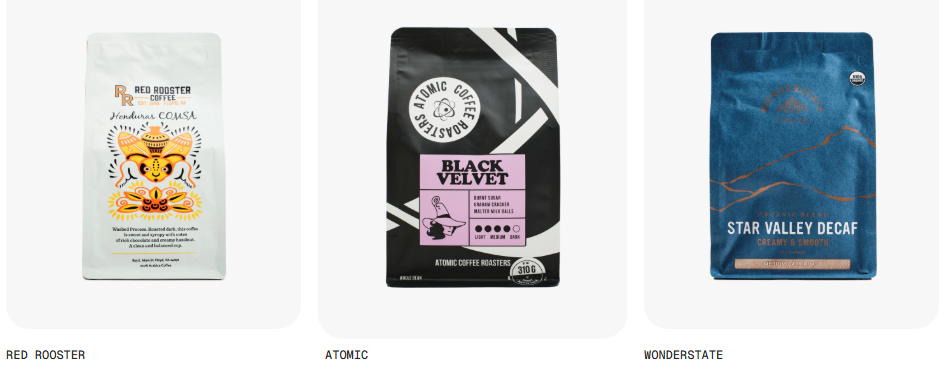

If you’re simply looking for the largest possible catalog, Bean Box takes the cake. Their roaster network includes over 60 roasters compared to Trade’s 55+, and their total catalog (currently about 689 coffees, to be exact) beats out Trade’s 500+. Regardless, both networks span the country and thoroughly vet and select high-quality, independent roasters, so the quality ceiling is high on either side.
Where the two differ is how that variety is actually delivered. Alongside their quiz-based matching, Trade organizes their catalog into themed collections based on roast level, brew method, origin, etc., so subscription aside, coffee drinkers browsing on their own still get plenty of structure. Bean Box’s larger catalog is funneled through eight broader buckets, including (but not limited to) curator’s choice, single origin, roast level, etc.
Both Trade and Bean Box also allow subscribers to browse their entire catalogs a la carté, so if you’re looking for something really specific, you can filter based on your preferences and find some coffees to try on your own.
So again, if the sheer size of the catalog is your metric, Bean Box wins. If you’re looking for size and personalization, Trade wins, and the next section dives a little deeper into why.
2. Personalization
This section is where the most clear split is between Trade and Bean Box, with Trade being the clear winner. Their initial quiz captures much more granular detail than many other subscriptions do, including things like how you drink your coffee at home, what brewing methods you use, and the specific flavor notes you gravitate toward.
Your answers then feed an ongoing matching system rather than assigning you to a pre-curated bucket. From the subscriber dashboard, you can then rate each coffee you receive so the matching system gets more accurate over time.
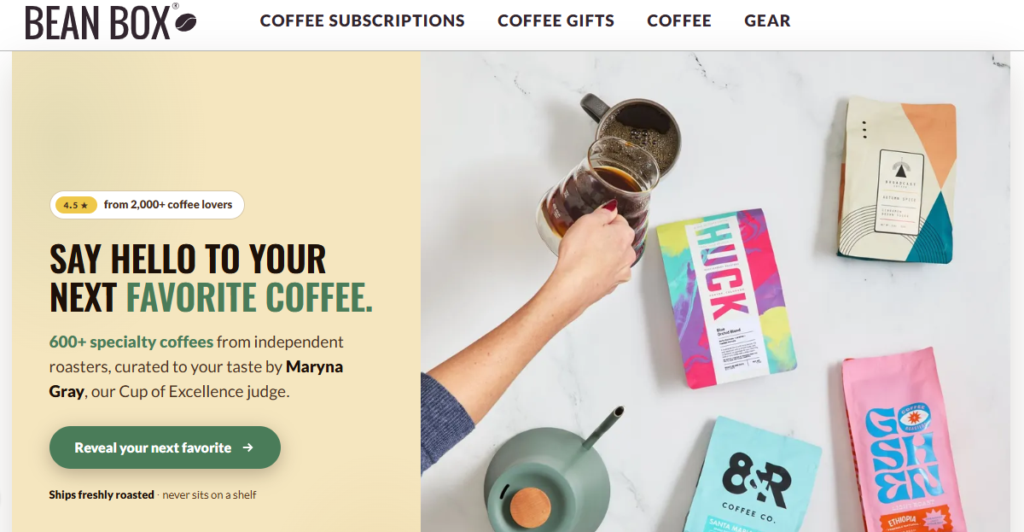
Bean Box is more so built around curation for a given category. Their personalization mostly stops at the taste profile or brewing method selection, and whichever category you pick determines the collection that coffees are picked from. While their subscribers can also rate what they receive, the selections are still largely dependent on the curator’s palate.
Both options are legitimate approaches. For someone who doesn’t yet have a good idea of what they do and don’t like, Bean Box might help narrow it down. But if you already generally know what your preferences are, want to explore more coffees within your taste profile (or even new taste profiles), and would rather have the system adapt to your tastes specifically, Trade will go much further.
3. Espresso Options

For espresso connoisseurs, both Trade and Bean Box have plenty of options. Bean Box treats espresso as its own dedicated subscription track, providing it as one of the eight core profiles a subscriber can select from the start. That means you can get an espresso-focused plan built specifically around suited roasts from the jump.
With Trade, you can either subscribe to their curated espresso collection, or your espresso preference can be captured as part of the broader quiz. Their quiz is more flexible in the sense that if you make more than just espresso at home, you can select multiple options (like espresso, pour-over, and cold brew), so your selection isn’t limited to one brewing method. Trade also believes that there are many coffees that could work well as espresso, so your taste preferences are as important as the brew method in matching you with coffees that you’d love.
While Bean Box’s espresso category can introduce you to a number of different espresso blends or roasts, this is another piece where personalization makes a difference. Because Trade’s matching system is more personalized, it will also go further to select espresso-appropriate roasts that suit your specific taste preferences.
4. Pricing
While it ultimately depends on whether or not you have a budget and how much you’re willing to pay per bag of coffee, Trade is the overall winner on price. Their per-bag pricing runs $16.99 to $21.99 depending on the roaster. Bean Box’s per-bag pricing runs $19.50 to $21.50 plus shipping, only dropping to $17.00 per bag if you select the annual plan.
Bean Box markets their bags as about 10% larger than the “industry standard” (12oz bags vs. 10.9oz bags), which technically lowers the cost-per-cup, until you factor in the shipping cost.
Their subscribers also get built-in member perks like 10% off à la carte purchases, free shipping on à la carte orders over $45, etc., which can help offset some of the price differences if you use it for long enough.
Trade’s baseline per-bag price is still the lower entry-level price and doesn’t require hitting a spending threshold to get free shipping. For a typical single-bag, 1-2x a week subscriber, Trade is the more affordable option.
5. Subscription Flexibility
Both Trade and Bean Box allow for the same baseline needs: pause, skip, cancel, or change your delivery frequency at any time and without penalty. Neither option locks a subscriber into anything.
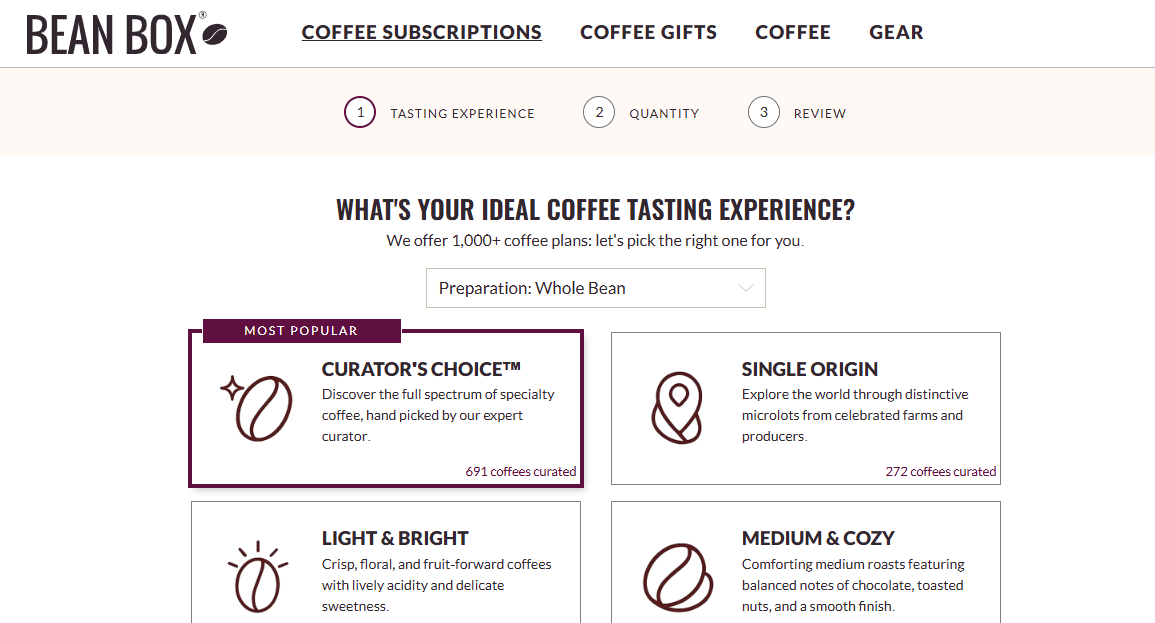
Bean Box’s flexibility shows up mostly in the mechanics. You can set your delivery frequency from every 2 to 6 weeks, choose from bag sizes from 12oz up to 5lb, and a choice of one or two bags per delivery. If you started out with their dark roast category and wake up one morning deciding you want to try light roasts for a while, you can log in and swap categories, no problem.
Overall, it’s mostly about adjusting the logistics of when and how much coffee arrives, not necessarily what specific coffees show up.
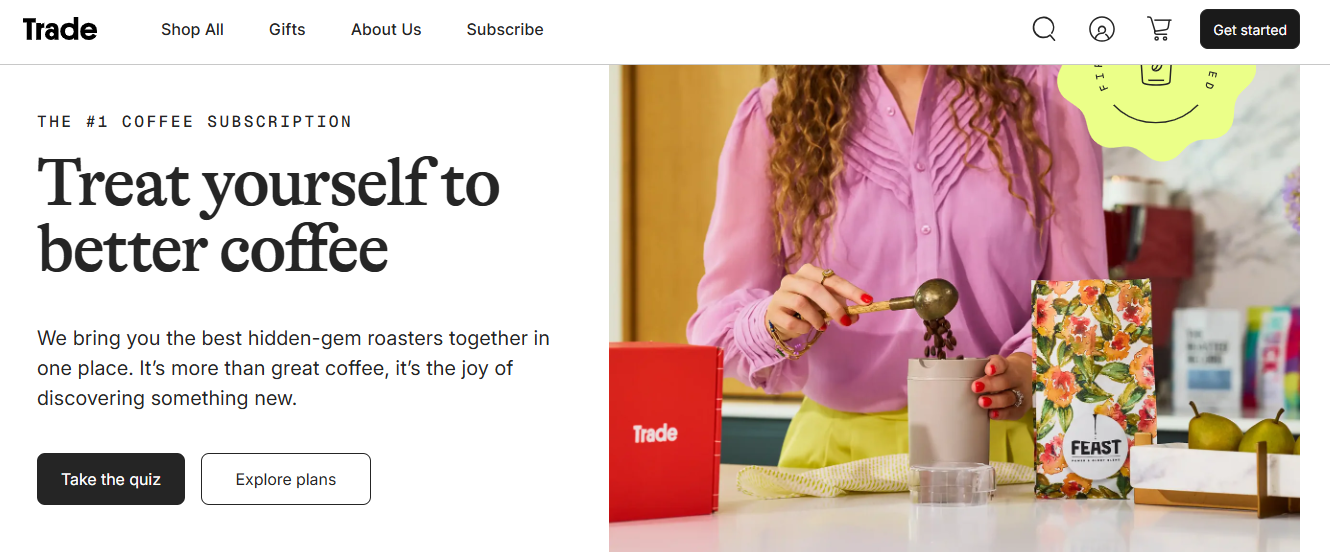
Trade’s flexibility works on both levels. Subscribers can adjust delivery frequency the same way Bean Box subscribers can, as well as go in and swap out upcoming deliveries for a specific coffee, repeat a past favorite, or simply fully lean into being surprised. For anyone who wants a little more say over what actually arrives on your doorstep each time, Trade offers more control.
Which Coffee Subscription is Best for You?
If you want the largest possible roaster network to pull from or you’d rather defer entirely to an expert curator’s palate instead of managing your own preferences, choose Bean Box.
If you’d rather have a subscription that adapts to your specific taste over time and you want greater control over what shows up in each delivery, choose Trade.
Both models operate similarly; they’re just optimized for slightly different subscribers. For most subscribers looking for an ongoing coffee discovery experience rather than a set-it-and-forget-it plan, Trade’s combination of granular personalization, direct control over deliveries, and lower baseline pricing makes it the stronger pick.

- A Buyer’s Guide to Baby Formula Subscriptions: What to Consider - October 5, 2026
- The Best Baby Food Subscription / Toddler Food Subscription - August 23, 2026
- Trade Coffee vs. Bean Box: Personalized Picks or Curator-Led? - July 21, 2026