

- Best Mistobox Subscription Alternatives At a Glance
- Trade Coffee: Best for Personalization
- Bean Box: Best for Large Coffee Catalogs
- Atlas Coffee Club: Best for Geographic Variety
- Podium Coffee Club: Best for Premium Coffee
- Angel’s Cup: Best for Palate Development
- Which One Is Actually Right for You?
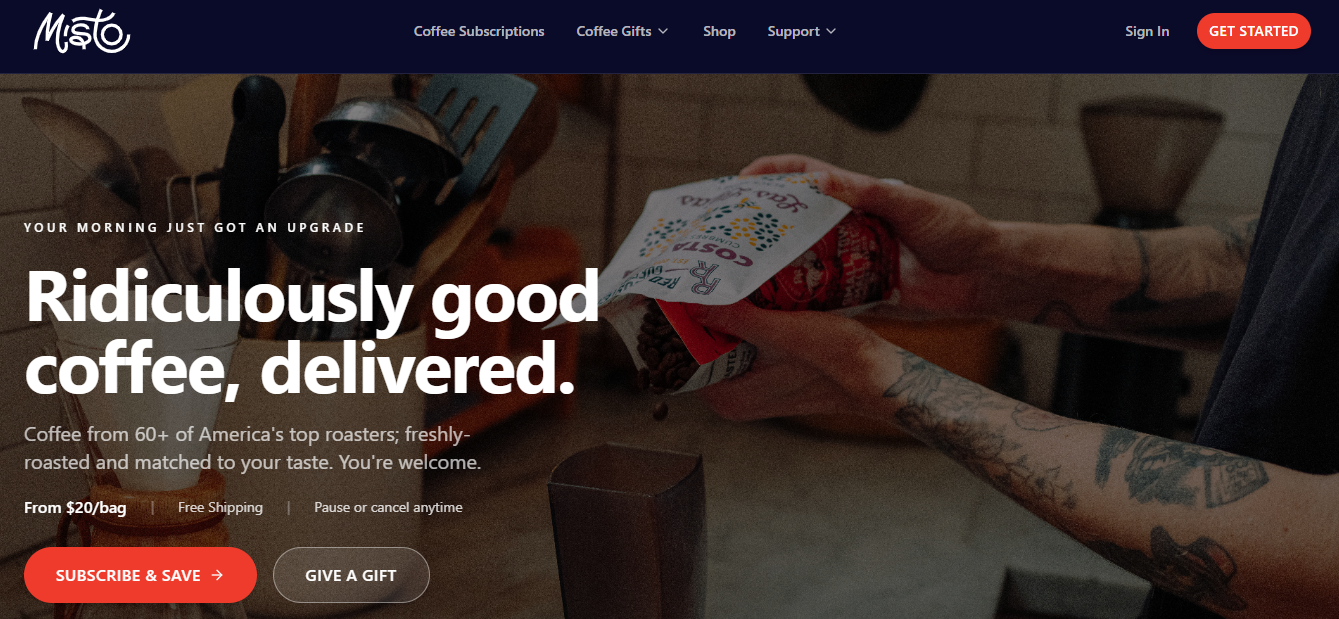
Mistobox has certainly earned their reputation as one of the more dependable coffee subscriptions. With a catalog of 600+ coffees from over 60 specialty roasters, a Brew Queue that lets you select your own bags or a human curator that handpicks them for you, and a delivery schedule that you can set down to the day, it strikes a nice balance between coffee diversity and flexibility.
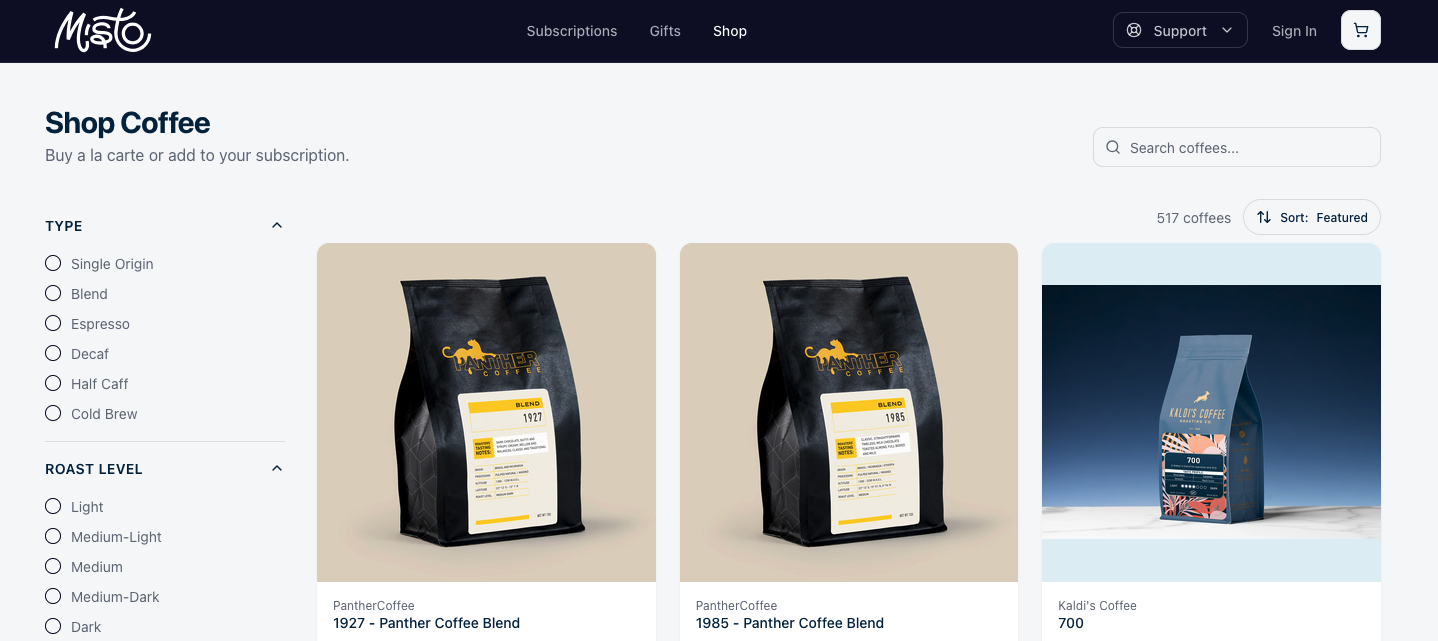
If you’ve been using it for a while, though, you may have decided that the personalization has started to feel surface-level. Maybe you want a subscription that learns more about your taste rather than just the categories you enjoy. Or maybe you want to explore what the broader specialty coffee landscape looks like beyond the roasters Mistobox has curated.
Whatever the reason, there are several multi-roaster coffee subscription alternatives worth checking out that offer the kind of diversity in coffees and roasters that you’re looking for. So let’s dive into what makes each one worth considering and how to know if it’s the right option for you.
Here’s the criteria:
- Multi-roaster network: The goal is to help you discover coffees and roasters you might never have come across otherwise, not just one roaster that does it well.
- Flexibility: Think delivery schedule, grind type, brew type, etc.
- Personalization: Coffee selections feel more intentional to your preferences, not just an objectively good coffee picked by someone else.
- Freshness: Roasted coffee has a limited shelf life — these subscriptions all roast and ship your coffee fresh to order.
Best Mistobox Subscription Alternatives At a Glance
| Best For | Customization Level | # of Coffees and Roasters | Pricing | |
| Trade Coffee | Maximum personalization | High | 500+ coffees from 55+ roasters | $16.99–$21.99 per bag |
| Bean Box | Breadth of catalog | Moderate | 650+ coffees from 60+ roasters | $19.50–$21.50 per bag + shipping |
| Atlas Coffee Club | Geographic exploration | Low | Rotating selection from 50+ countries | $19.50–$21.50 per bag + shipping |
| Podium Coffee Club | Guaranteed quality ceiling | Low | 1 per month; dozens of award-winning roasters | $24.50–$29.50 per month + shipping |
| Angel’s Cup | Developing your tasting skills | Low | 200+ coffees from 150+ roasters | $27.50/box + shipping |
Trade Coffee: Best for Personalization
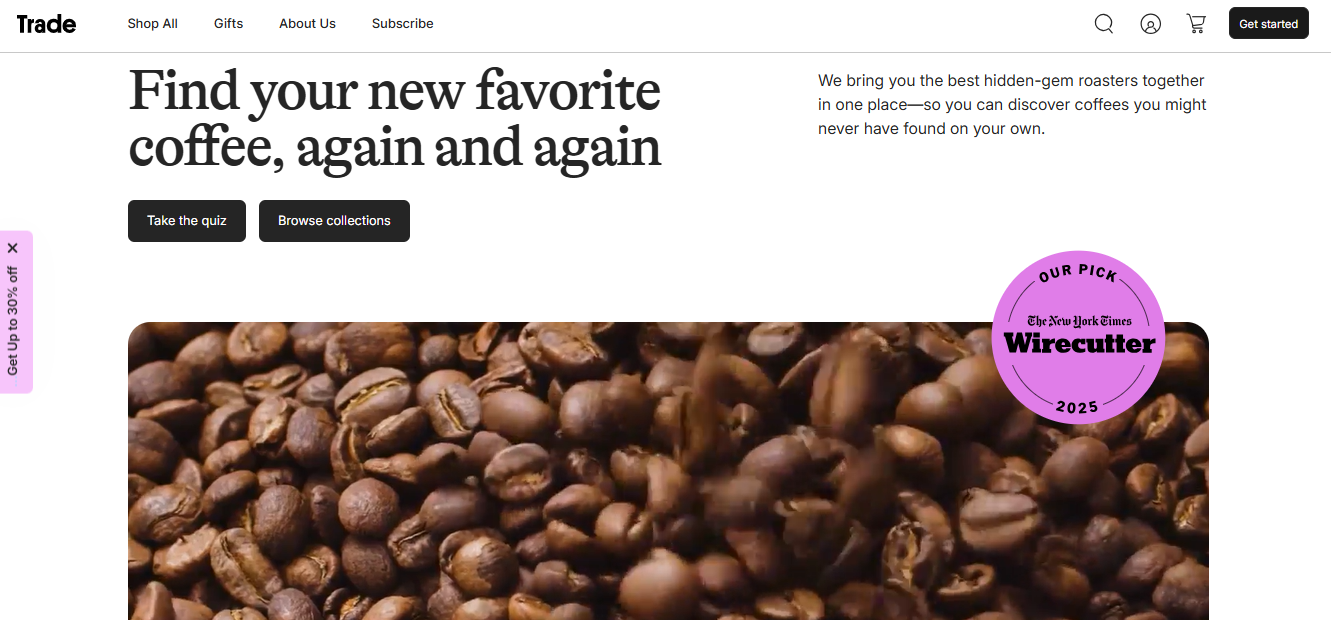
If you care most about coffees that are matched specifically to your preferences, Trade is specifically designed to do just that.
You set up your subscription with a short quiz that’s more thorough than many others on the scene, covering not just the basics like roast level and taste profile, but also how you brew and drink your coffee (black, with milk, etc.). This is significant because coffee that shines as a pour-over doesn’t translate well to a latte.
Trade uses those answers to build your taste profile and match you with coffees from their 55+ roaster network, then continues refining those matches based on your ratings over time. Basically, the longer you use it, the smarter it gets. And if your first bag misses the mark, they’ll replace it for free. Finally, if specified, they can also grind your coffee specifically to your brew type rather than defaulting to a generic medium grind.
The catch is that all this precision only pays off if you stay engaged; its ability to match coffee to your tastes is only as good as the feedback you provide, so a hands-off user leaves most of its value on the table.
Keep reading: What is Trade Coffee Really About? – Reviewed by a Coffee Expert
Pros:
- Personalized recommendations based on a comprehensive quiz and refined over time
- First bag replaced for free if it’s not right
- Limited-edition coffees released every two weeks
- All coffees are roasted to order and shipped within 48 hours of roasting
Cons:
- Works best with active engagement — not optimal if you’d rather set it and forget it
- Not as effective if you don’t yet know what you do and don’t like
Bean Box: Best for Large Coffee Catalogs
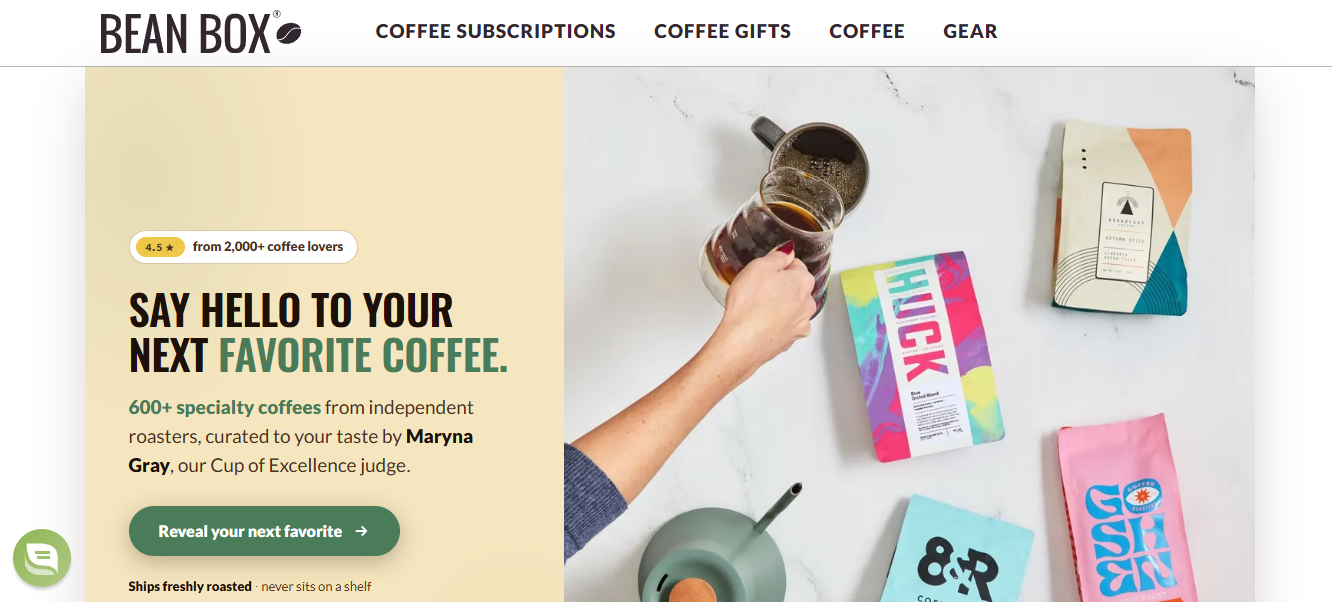
With over 650 coffees from 60+ specialty roasters, Bean Box has the largest catalog of any other subscription on this list. The curation is handled by a Cup of Excellence judge, which means you can rest easy knowing each coffee is of high quality.
This model is also more hands-off than Mistobox. You simply choose one taste profile (Curator’s Choice, Single Origin, Light & Bright, Medium & Cozy, Dark & Toasty, Espresso, Decaf, or Cold Brew) and whether you need whole bean or ground, and the coffees are picked for you by someone you know has a pretty good idea of what they’re doing.
It’s a good fit if you want to cast a wide net without needing to be deeply involved in the selection yourself. The sheer breadth of the catalog and the simplicity of the categories mean you’re pretty much guaranteed a wide variety of both coffees and roasters. If you just want to try as many coffees from as many roasters as possible, this can be a good place to start.
What you give up for that breadth is granular control: you’re picking a broad category and trusting the curator, not steering toward specific origins or profiles yourself.
Pros:
- Largest catalog by number (600+ coffees from 60+ roasters)
- Expert human curation by Cup of Excellence judge
- Simplistic and hands-off
Cons:
- Less control over preferences
- Default grind size only
Atlas Coffee Club: Best for Geographic Variety
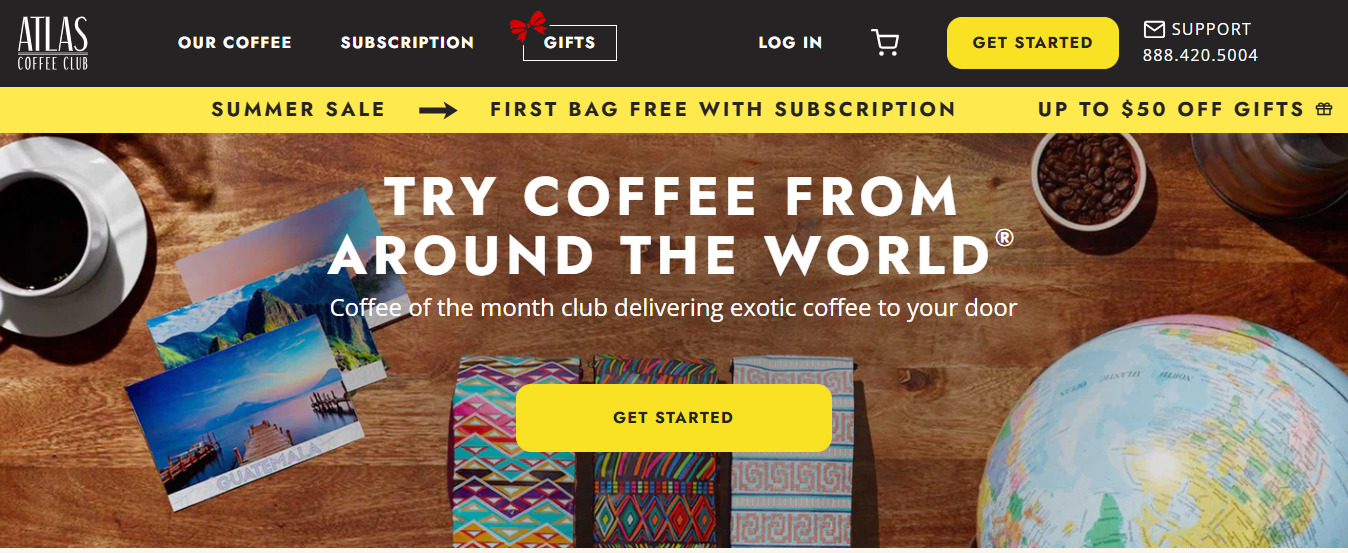
Atlas is a bit different in that every month you receive a single-origin coffee sourced from a different country. The geographic variety is here, but it’s also worth noting that they roast all of their own coffee in-house, so there’s no roaster variety to be had.
YOu migth also be interested in: The Best Atlas Coffee Club Alternatives
In each box, you also receive a postcard describing the country’s coffee history, tasting notes, and brewing recommendations. The idea is that you move through 12 different origins in a year, from popular coffee hotspots like Ethiopia, Costa Rica, Colombia, and Papua New Guinea.
This is another more hands-off model: After choosing your roast level, taste profile, and grind preference, Atlas handles everything else. There are no queues to manage or ratings to submit. In a way, it forces you to try coffees you might not have chosen yourself, which can be a good way to expand your palate. The tradeoff is that if the monthly pick doesn’t suit you, you’re stuck waiting until next month for another shot.
Pros:
- Single-origin coffees from 50+ countries
- Educational experience with each delivery (postcard, tasting notes, history)
- Low-effort, no decisions necessary after initial setup
Cons:
- Coffees only rotate once a month
- Little input beyond roast level
Podium Coffee Club: Best for Premium Coffee
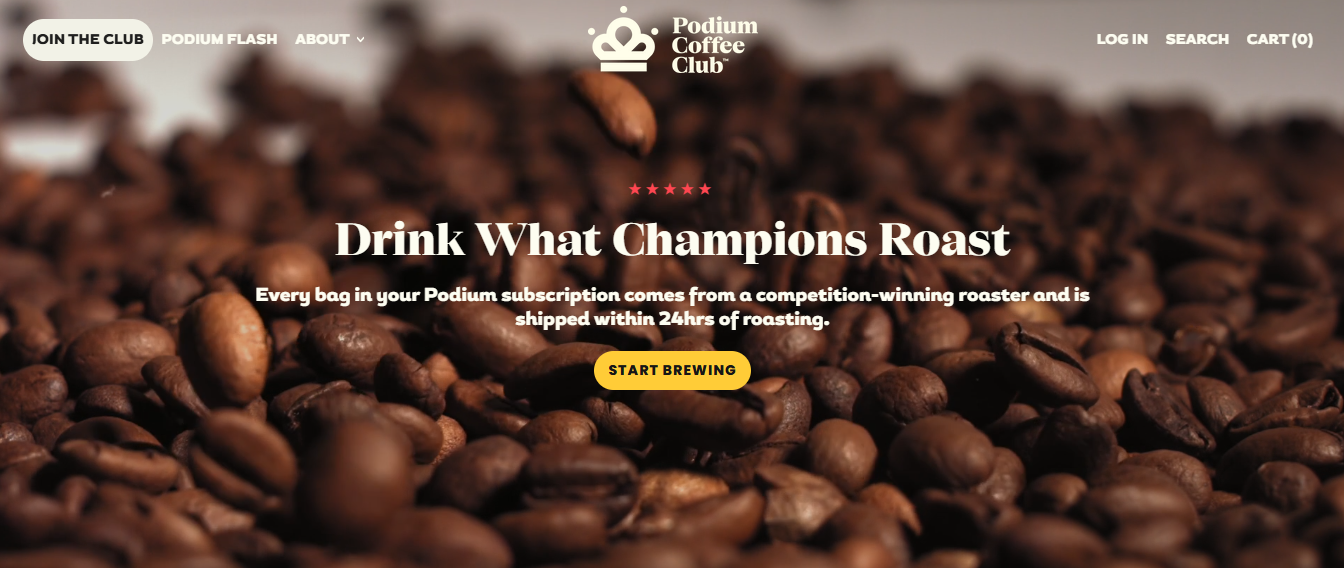
Podium’s model is simple: every roaster they work with has won at a major U.S. coffee competition (i.e., the U.S. Coffee Championship, Good Food Award, Golden Bean). No exceptions. The coffees themselves aren’t necessarily the competition-winning lots, but they’re all coming from roasters who are at the very top of their game.
The result is a subscription that’s all about guaranteed excellence, every single time. All you have to do is simply choose between their Gold and Platinum tiers, with Platinum offering rarer, more limited coffees. They roast on the same days each month and ship within 24 hours of roasting (only whole beans) to preserve freshness.
That said, the tier selection is pretty much the full extent of what you control. If you’re the kind of coffee drinker who wants to know your coffee is exceptional and is happy to let someone else define what that means, Podium might be the one for you. But if you have strong preferences about roast profile, origin type, or delivery timing, this can be a difficult model to work within.
Pros:
- One coffee a month from a U.S. competition-winning roaster
- Always ships within 24 hours of roasting
- Higher quality than any other service
Cons:
- Whole bean only; not an option if you don’t have a grinder at home
- No delivery schedule flexibility (ships only between the 5th and 10th of each month)
- No personalization beyond tier selection
Angel’s Cup: Best for Palate Development
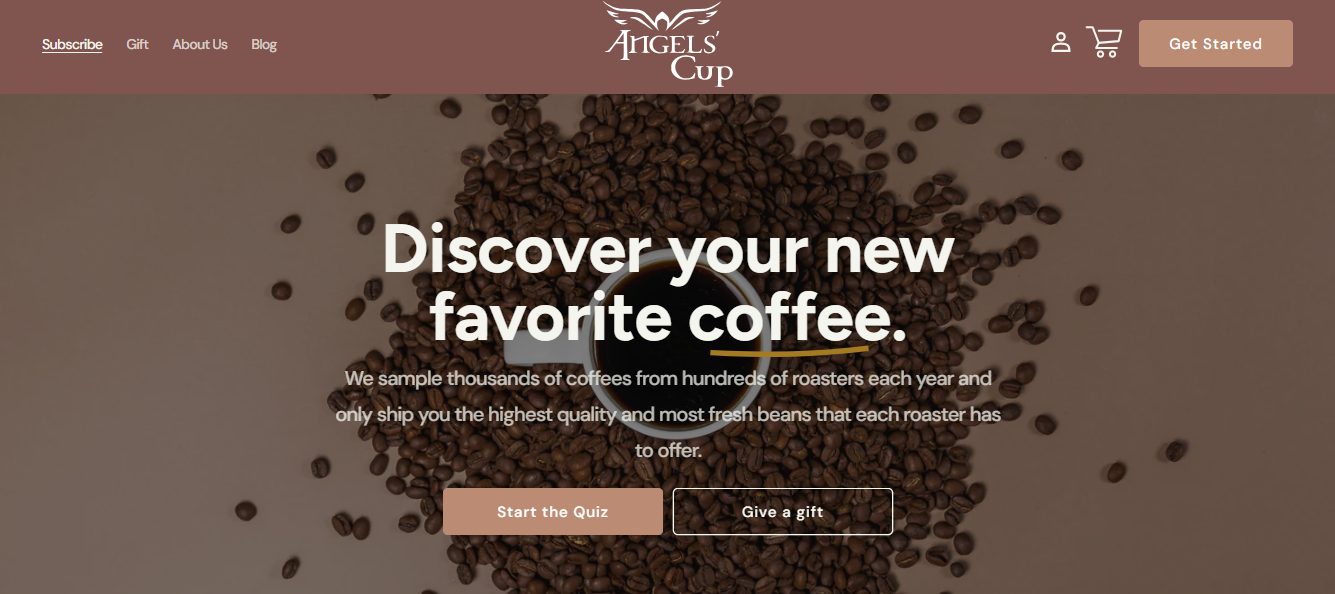
Sometimes, the tasting notes listed on the bag shape our opinion about what it will taste like — before we’ve even tried it. Angel’s Cup takes a different approach, removing that factor from the equation entirely.
Every delivery is designed as a blind tasting: You receive four 1-oz samples per box, and they arrive labeled only by number. You brew each one, log your notes in their free app, then compare to the roaster’s own description and what other subscribers thought. It’s almost like a coffee subscription and a structured tasting practice rolled into one. And because each delivery is essentially a coffee flight, you get to taste a broad selection rather than commit to a full bag of something you may or may not enjoy.
Their roaster catalog is also massive. They work with 200+ roasters and cycle through 400+ coffees per year, which is more roaster variety than any other service on this list.
That said, personalization is fairly minimal. You pick a roast level and delivery frequency, and they handle the rest. Light roast coffees rotate weekly, medium every two weeks, and dark every four weeks (so if you’re a dark roast enjoyer, you have to wait a full month to try something new). And if you’re a daily drinker, this works better as a tasting practice alongside another subscription rather than a standalone because the samples are so small.
Pros:
- Blind tasting model removes bias to help train your palate
- Network of 200+ roasters
- Free tasting app with community tasting notes and roaster comparisons
Cons:
- Minimal personalization (roast level preference only)
- Small sample sizes, not ideal for daily drinkers
- Less variety for dark roast drinkers
Which One Is Actually Right for You?
If your issue with Mistobox is not enough personalization or a subscription that doesn’t go deeper than roast level and brew type, Trade Coffee is the most obvious upgrade, with a fantastic quiz, personalization algorithm, and depth of catalog.
If you want the widest possible net, Bean Box is a great fit, with the largest catalog on this list and expert curation doing the work for you. And if you want to actively sharpen your palate with taste tests that come with no bias attached, Angel’s Cup turns each delivery into a blind tasting exercise, pairing a huge roaster network with a structured way to learn what you actually taste.
You can’t go wrong with any of these options, however. What they all have in common is the same thing Mistobox already got right: fresh-roasted coffee from people who take it seriously, delivered to your door. The difference is in the methodology.
